

What is No-Show Modelling?
An automated calculation that weighs historical guest behaviour patterns to predict exactly how many confirmed arrivals will fail to check in, allowing safe inventory adjustments to reach true 100% occupancy.
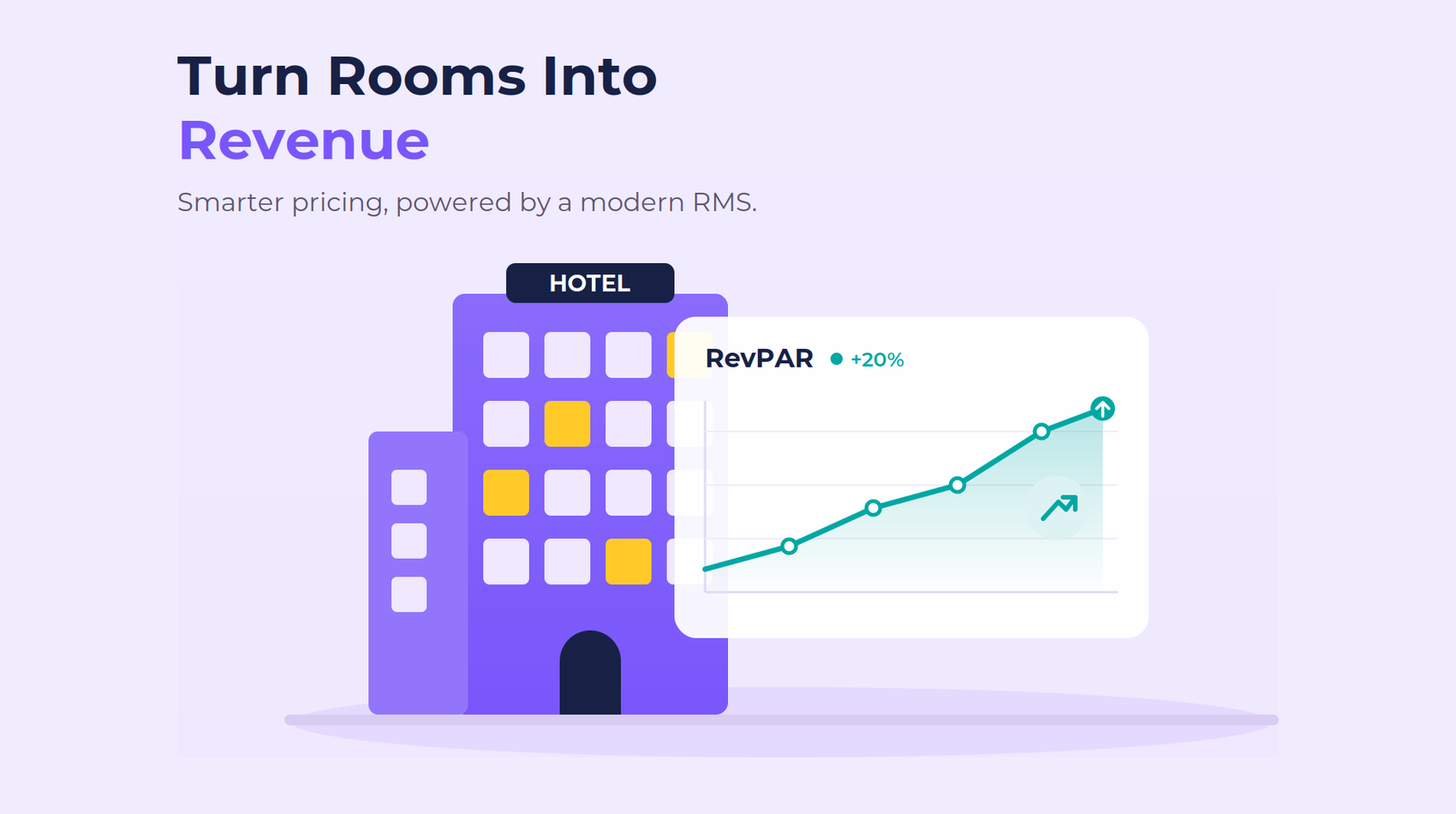

Running an independent hotel without an RMS can feel like pure guesswork. Modern hotel revenue management features are built to alleviate that stress. Instead of just automatically changing nightly rates when a competitor adjusts theirs, a smart Revenue Management System (RMS) helps you automate the most complex, time-consuming parts of your daily operations, slashing over 40 hours of manual labour each month.
While hoteliers might understand the value of leveraging data analytics with a modern RMS, it can still be overwhelming to make the right choice with so many options in the market. This guide will look past hotel revenue management basics and explore the core tools that save independent hoteliers time, eliminate manual admin mistakes, and protect your hard-earned profit margins.
Ready to take your hotel to the next level? Book a demo with a Noovy expert today, and get to know our RMS, built specifically for independent hotels.
A common misconception in hospitality is that RMS tools are simply an automated calendar designed to adjust room prices based on competitor behaviour. While basic rate updates are helpful, relying on them ignores the total profit potential of your property.
In truth, a hotel revenue management system does far more than just tweak room rates; it optimises every single asset, room tier, and guest segment across your entire property for maximum profitability and efficiency.
Advanced hotel RMS functionality enables lean teams to reduce the administrative strain of traditional revenue management, freeing up over 40 hours a month that can be used for guest-facing and profit-generating hotel activities:
When combined, the smart features of a modern RMS lead to significant hotel profit growth, financial efficiency, and staff happiness that reflects on the guest experience. In practice, these are the hotel yield management tools that used to require a dedicated corporate revenue team, now running quietly inside one platform.
To get the most out of an RMS, it’s important to identify the real operational pain points that independent hoteliers suffer from. Here are six essential RMS features that boutique hotels can use to protect their profits and growth:
Managing group bookings such as local weddings or sports teams is often a major source of stress for independent operators. When an event planner requests 15 standard rooms on a peak summer weekend, how do you decide what discount to offer them? If you price too high, the group walks away to a competitor. If you price it too low, you lose out on regular retail travellers who would have paid full price directly on your website.
This dilemma is known as displacement analysis, and modern hotel group booking quotation software solves this problem. Instead of opening a spreadsheet and trying to predict future demand, the system evaluates your hotel’s historic booking patterns, current pace, and remaining inventory. It then calculates an optimised "minimum acceptable group rate" instantly.
This allows your sales team to confidently provide a profitable quote to event planners, ensuring that a large group booking won’t accidentally cost your hotel money.
Managing group booking inventory up until check-in still provides many threats of profit loss. For instance, a team coach might reserve 30 rooms in advance, but only end up filling 22 of them, leaving 8 rooms fully unbooked and too late to fill. This is called a wash factor: the statistical probability that a large group will always fail to fill 100% of the rooms they initially reserved due to cancellations, early departures, or no-shows.
Hotels that rely on manual cutoff dates are often forced to keep all 30 rooms off the market until a week before arrival. By the time those 8 empty rooms are back on the market, the hotel's booking window has narrowed, forcing the hotel to slash prices just to fill them.
Smart group booking cleanup features reduce this risk by tracking booking habits pre-emptively. A modern RMS recognises early on that a group type historically drops a portion of their bookings. Knowing this, the RMS can schedule these rooms for automated re-uploading at the official cutoff date.
This allows hotels to capture high-value public demand as early as possible, preventing sudden, unsellable drops.
Most independent hoteliers set up their rooms with rigid, fixed price differences between room types. For example, a hotel may decide that a double room is always exactly €100 more than a standard room, regardless of the season or demand intensity.
Modern hotel rate analysis software exists to catch exactly this. This flawed pricing strategy completely misses dynamic demand. For instance, if a local festival fills out all the standard rooms, then double rooms might sit empty due to the fixed upgrade fee being out of budget. Conversely, if a high-net-worth traveler wants an executive suite, a fixed price gap might prevent them from paying the maximum premium they were actually willing to pay.
Dynamic pricing with a modern RMS helps fix this by continuously monitoring the booking velocity of each room category. If double rooms are booking up rapidly but luxury suites are stagnant, the software automatically narrows the pricing gap to make upgrading irresistible to travellers. If executive rooms experience a sudden surge in interest, the system expands the gap instantly for maximum profit margins.
The most negative experience a guest can have is being turned away with a confirmed reservation because the hotel is completely full and has no beds left. It’s stressful for the front desk, and a disaster for the hotel's public image.
To avoid this situation, many independent properties set strict inventory caps, completely banning over bookings. However, refusing to overbook always guarantees some empty rooms. No-shows, early leavers, and unexpected cancellations always take place.
A modern RMS has advanced overbooking safeguards that take the fear out of inventory management. Instead of playing a guessing game, the RMS evaluates years of historical check-in data, and daily patterns to determine how many bookers are statistically likely to cancel on their reservations.
The system then establishes a safe, controlled overbooking threshold, allowing you to accept just enough extra business to offset a guaranteed cancellation. That way, the hotel achieves true 100% occupancy and peak profitability at the same time.
When determining how successful a calendar date was, most hotels just look at the revenue per available room (RevPAR). While this metric is important, it only measures the profit generated by the room, not the amenities, upsells and services.
To understand the true profit of a hotel, the total revenue per available room (TRevPAR) is a much more accurate measure. It accounts for every single euro spent across the entire stay. TRevPAR is calculated using the formula:
The ancillary revenue optimisation hospitality features of a modem RMS helps hotels track and analyse the spending habits of guests to better tailor upsells. For example, corporate travellers may pay more for rooms, but spend nothing on add-ons. Meanwhile, weekend bookers might opt for cheap rooms, but spend heavily on dinners and amenities.
An RMS can automatically prioritise inventory for high-spending guest profiles during peak demand, maximising the overall financial performance of your entire hotel.
Some independent hoteliers have more than one property, which makes it more difficult to oversee operations. What if each of these properties is a different style (e.g. cottages, and a city centre business hotel) with different needs?
Modern RMS systems have multi-property dashboards that provide an elegant, cloud-based portfolio in a single interface. From one screen, an independent hotelier can monitor real-time performance, demand shifts, and pricing strategies simultaneously.
Hoteliers no longer have to spend hours navigating systems, hopping tabs, or travelling between places just to keep portfolios aligned. An RMS provides a unified view of the business, allowing hoteliers to balance inventory and maintain control in just a few clicks.
The true value of investing in modern hotel RMS technology extends far beyond monthly profit and loss. For an independent hotel, it frees up countless hours of wasted labour, team stress, and unnecessary spending, all indicative of severe operational shortcomings.
Automated RMS software workflows utilises these software capabilities to handle complex mathematics and inventory cleanup quietly in the background while staff focus on guest facing services and hospitality.
Furthermore, an RMS unites sales, front office, and catering around a single goal, informed by a single source of data. That way schedules, labour, and purchasing workflows can be perfectly optimised to take hotel performance and profit to new levels.
Treat the list below as a quick hotel RMS checklist of the essential hotel RMS features worth demanding from any vendor, the hotel revenue management essentials for an independent property. By leveraging the right revenue management features, independent properties can:
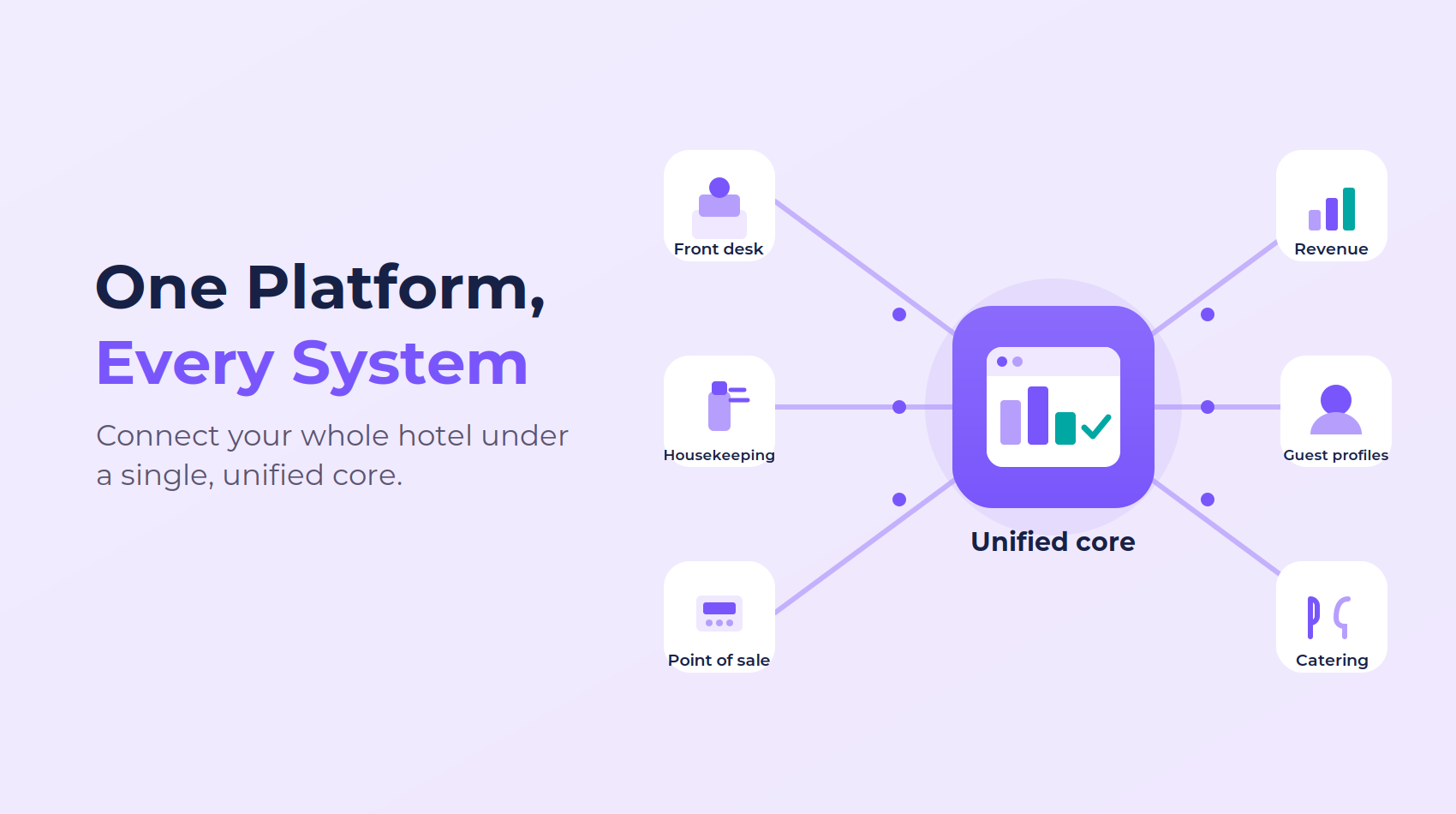
At Noovy, we believe that independent hoteliers shouldn't have to navigate complex data or heavy statistical jargon just to protect their profits. That is why we designed our cloud-native RMS platform to deliver enterprise-grade performance through an incredibly clean, accessible, and intuitive user interface.
Our system connects seamlessly with your independent Property Management System and digital distribution channels, running powerful, predictive calculations quietly in the background. You get all the financial power of a major corporate chain without the need for a hefty budget.
Ready to see how simple hotel revenue management can be? Book a Demo with the Noovy team today.