Guest personalisation is a vital aspect of any hotel venture, and the CRM is the central hub that handles the guest data. The importance of guest experience in hotels cannot be overstated. Nevertheless, many boutique hotels still haven’t made the switch to a modern CRM, often leading to reactive problem solving instead of proactive hospitality.
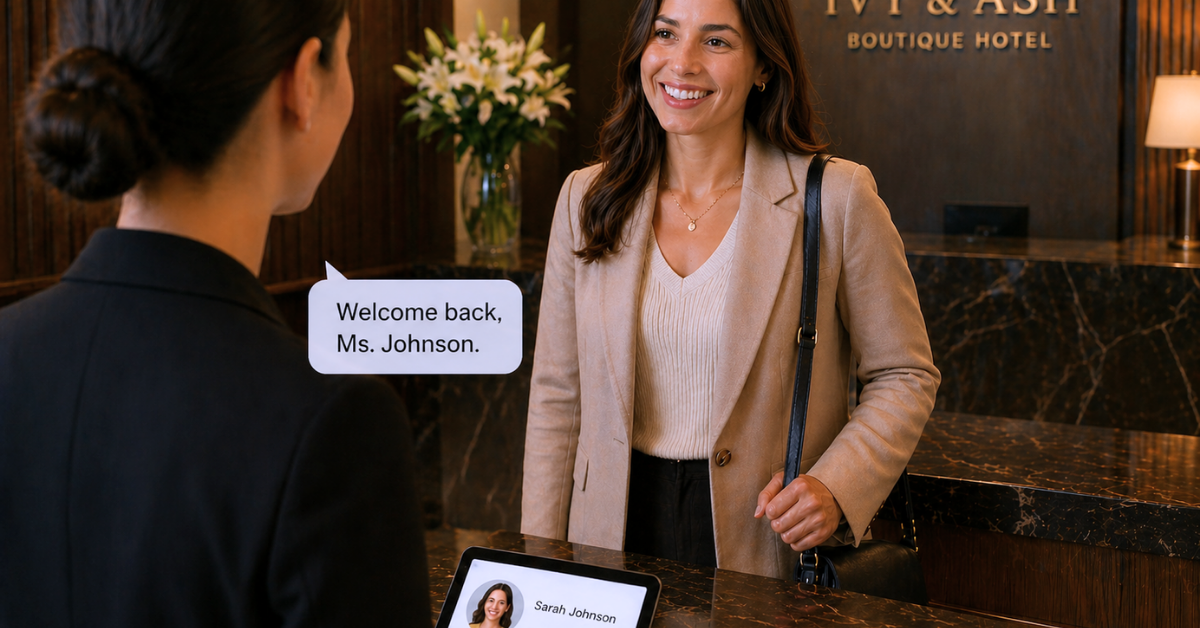
One of the greatest challenges facing independent hoteliers without a CRM is the failure to remember guest details. This leads to a cold, impersonal hotel guest experience that does more harm than good to your rating and publicity.
Ever wondered how to improve your hotel guest experience? This tactical guide provides you with a roadmap of ideas to enhance your hotel guest experience with modern CRM solutions. That way, you can empower your staff to deliver exceptional care, nurture positive guest experiences, and grow your reviews and revenue.
Ready to learn how technology can improve hotel guest experiences? Book a demo of Noovy's tech stack today and see for yourself!
Table of Contents
What is a Hotel CRM and Why Does It Matter?
Customer Relationship Management Systems (CRM) function as the brain of your guest interactions. Think of it as your hotel guest experience software. While a PMS is designed to manage rooms, the CRM is designed to manage people and relationships.
A CRM works by centralising all your guest data from various digital touchpoints (emails, chats, bookings) into a single unified guest profile. This allows your hotel staff to avoid confusions around check-ins, check-outs, special requests, allergies and more.
Your hotel guest experience platform also keeps track of special details like returning guests, birthdays, and anniversaries. This gives your team the upper hand in creating a personalised guest experience that will turn your one-time visitors into loyal customers.
How Does CRM Protect Knowledge During Staff Turnover?
In today's modern hospitality industry, chronic labour shortages are commonplace. In Europe alone, the hospitality sector covers around 10 million jobs and over 2 million businesses, yet staff shortage rates sit at a concerning 10% or more (Hotel Management Network, 2026).
For independent boutique hotels, staff turnover can literally drive the business to a standstill. When a long-term receptionist leaves their role, their personal knowledge of your guests and their history often leaves with them, making it hard to operate as usual.
By centralising guest data in a CRM, your hotel creates institutional memory; a transparent record of all your guest details that is not hidden away, nor difficult to access. This ensures that even a new hire can see that a guest prefers a quiet room or has a specific allergy.
To help move beyond basic data entry, here’s a tactical workflow to implement:
- Capture: Get an integrated hotel booking engine. That way when a guest books a stay, the data is automatically pulled by the CRM to create a guest profile or update an existing one, as well as add guest specific tags (e.g., purpose of stay, room type).
- Enrichment: Train front desk staff to pick up on valuable information during check-in. For example, if a guest mentions that they are celebrating an anniversary, the staff must immediately add an anniversary tag to the guest profile in the CRM.
- Feedback: When guests check out of your hotel, make sure that any feedback from post-stay surveys are automatically mapped back to the guest profile with your CRM. This helps inform your team before their next visit.
Benefits of CRM Powered Personalised Guest Experiences
The main advantage of personalising hotel guest stays is the ability to meet guest needs before they are even communicated. This anticipatory service is the hallmark of luxury hospitality and a key guest retention strategy, now accessible to independent hotels through CRM technology.
- Anticipatory Service: If a guest's profile shows they previously complained about a room being too cold, your CRM can trigger a housekeeping task to provide an extra blanket and set the thermostat to 22°C before they even arrive.
- Segmented Amenities: Instead of a generic fruit basket, CRM data can help provide welcome gifts that align with a guest's persona (e.g., a local craft beer for a backpacker or a wellness juice for a health enthusiast).
- Effective Marketing: By knowing guest preferences, your marketing becomes highly relevant. Instead of a generic “10% off” coupon for everyone, guests can be offered tailored promotions that suit their interests and are much more likely to be engaging.
How CRM Is Used to Personalise the Hotel Guest Experience
A hotel CRM plays a vital role in personalising the hotel guest experience journey, and should play a focal role in your hotel guest experience strategy. Here are the most notable five key stages of a guest journey that a CRM can optimise:
Collecting Guest Data at Check-In
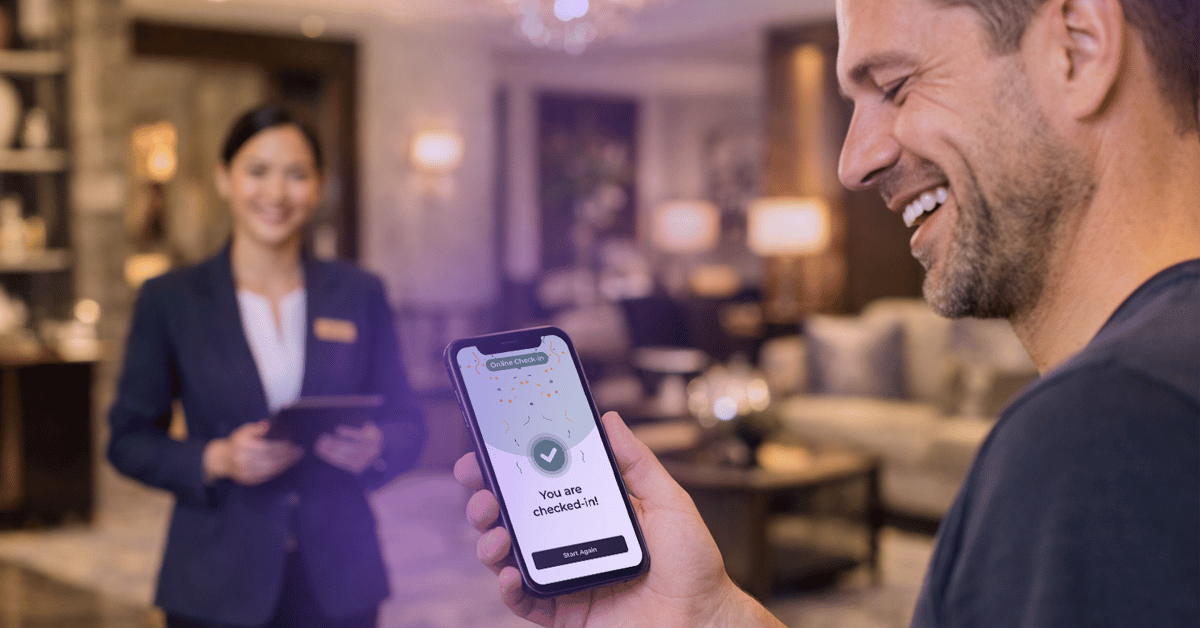
Check-in is the golden moment for data capture with a CRM. While digital check-in is efficient, it also provides an opportunity to "unmask" guest contact details. With real email and preferences in your portal, your guests transition from an anonymous OTA booking to a direct relationship.
Personalising the Guest Experience
Hotel guest profile management is only effective if the information is surfaced to the right person at the right time. CRM personalisation helps to automate this data visibility. For example, Noovy’s system displays preference tags directly on the housekeeping dashboard so the team knows exactly how to set up the room.
Upselling Based on Guest Behaviour
Generic upselling campaigns are usually impersonal and ineffective, whereas guest data-driven upselling brings a much better success rate. If the CRM knows a guest is travelling for business, offering a "fast-track breakfast" or "late check-out" is a tactical win that solves a problem for the guest while driving incremental revenue for your hotel.
Automating Guest Communication
Many hotels fear that automated communication feels robotic, but this is not the case if done properly. CRM data tags in a centralised guest messaging tool help personalise messages, so that automated texts are contextual to your guests. This helps prove that you remember guests, which is the highest form of service.
Analysing Guest Feedback
A hotel guest CRM creates the best opportunity for a learning loop. By analysing which guests return and why, your marketing approach can be refined. For example, if solo business travellers are your most loyal segment, you can tailor your on-site experience to suit their needs, such as advertising high-speed Wi-Fi and 24/7 gym access.
Data-Driven Guest Experiences vs. Generic Hotel Service
The difference between a generic hotel stay and a personalised experience is that the former treats all guests as a single entity, while the latter views guests as personas, complete with their own preferences and comforts.
Personalising the hotel experience relies heavily on unmasking guest data. This is normally done in two different ways, and it’s important to know the difference:
- Customisation: When the guest has to do the data collecting for your hotel (e.g., filling out a long form of what they want). Traditionally, this method was common.
- Personalisation: When the hotel does the work automatically through data collection (e.g., the hotel uses a CRM guest profile to document your details and make predictions based on them). This approach is more common in modern hospitality.
Guest personalisation is by far the most efficient and impactful approach to creating a positive guest experience. By leveraging website interactions and check-in data, you can unmask guest interests before they even arrive at your lobby.
For example, if a guest interacts with your local attractions website page, your CRM can trigger an automated message or pop-up offering to book a tour for them. This is anticipatory service in hospitality at its most effective, and you can apply it by following these easy steps:
- Identify: Group your guests into 3-5 main personas (e.g., The Digital Nomad, The Weekend Romantic, The Family Explorer).
- Trigger: Create specific CRM "Action Triggers" for each persona.
- Execute: The Digital Nomad receives a "Coffee Refill" alert; The Family Explorer receives a "Kids Eat Free" voucher.
CRM Personalised Guest Experiences: Wrap-Up
Independent hoteliers no longer need to rely on luck or manual memory to provide a world-class experience. By implementing a tactical CRM strategy, you centralise your guest data, solve the problem of staff turnover, and ensure every guest feels recognised.
The move toward data-driven guest experiences is not just about technology; it is about returning to the roots of true hospitality: knowing your guest.
Why Noovy?
Personalisation is the key to competing with global chains and high OTA commissions. Noovy’s integrated guest profiling CRM provides just that.
Our CRM is specifically engineered to centralise all your important guest data into one place, helping avoid miscommunication and boosting proactive guest services.
With preference tags, you can retain even the most specific of requests for years to come. When a guest who previously complained about "street noise" books again, Noovy’s system alerts the manager to arrange a quieter room way before the guest even reaches your lobby.
Want to take it a step further? Integrate our CRM with a hotel booking engine so that every piece of data captured during booking is immediately available to staff on the floor.
Ready to activate your data? Book a demo with Noovy today to see how our integrated guest profiling engine can help you deliver 5-star personalised experiences at scale.