
Skip to content
Technology & Operations

Green Technology & SaaS: The Ultimate Guide for Sustainable Hotels

Akif Aliyev
Akif Aliyev
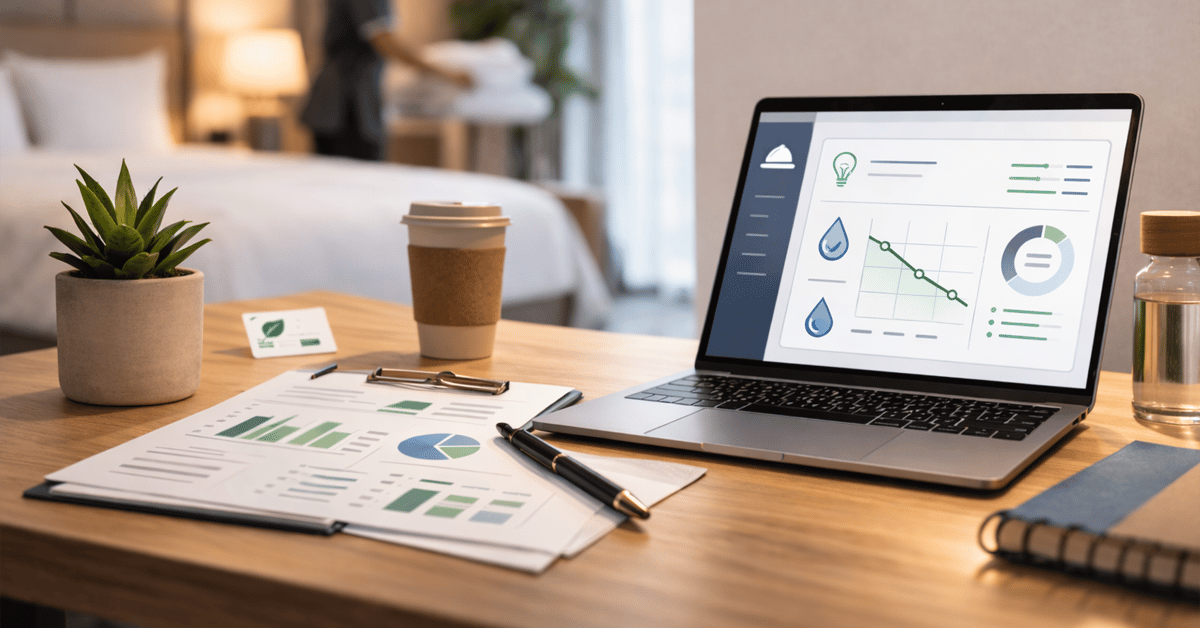
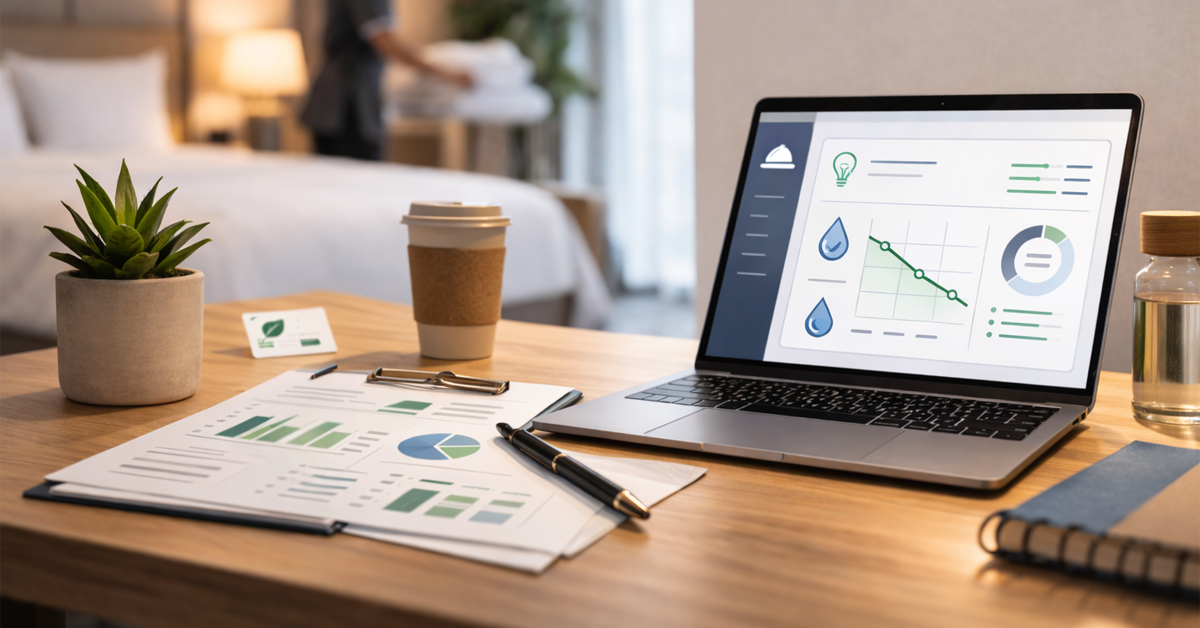
A smart housekeeping interface open on a hotel laptop.
  • Around 10 - 12% of a hotel’s annual revenue is lost to energy costs, roughly three times the percentage from 2019. This means that a 70 bedroom hotel spends nearly €380,000 in annual energy costs (AgAssociates, 2023).
  • Energy management systems (EMS) and IoT sensors are modern tools designed to gauge overuse and automate energy efficiency, cutting hotel energy consumption by up to 40% (GSA, 2023).
  • Green hotel technologies and IoT sensors encompass all hotel operations, devising data backed efficiency solutions for avenues such as heating, lighting, water use, food waste, and even housekeeping.

The hospitality industry in 2026 faces a sustainability paradox. On one hand, modern travellers no longer just prefer eco-friendly stays; they expect them. On the other hand, rising costs, staffing shortages, and staggering OTA commissions drive hoteliers into a tough corner. 

According to 2025 industry benchmarks, 78% of global travellers intend to stay in a sustainable property at least once in the coming year (Statista, 2022). As daunting as the transition may seem, going green doesn’t require huge spendings on solar panels and recycling systems.

The most immediate and cost-effective path to sustainability lies in upgrading your software. By adopting sustainable hotel technology, independent properties can reduce their carbon footprint while simultaneously optimising their bottom line.

In this ultimate guide, we’ll walk you through everything about green hotel technologies and sustainable software transitions to slash your spendings and boost operational efficiency for both your team and your guests.

Ready to turn your hotel into an eco-friendly powerhouse? Book a free demo today and see how Noovy's all in one tech stack can slash your costs and boost your profits.

Table of Contents

The Shift to Green SaaS: Why Cloud-Native Matters

Traditionally, the “brain” of a hotel, the property management system (PMS), was a bulky server tucked away in a tech room and monitored by on site IT staff. These on-premise servers were notorious energy hogs, requiring 24/7 power and constant cooling efforts, regardless of how booked your hotel was. In addition, PMS hardware typically becomes obsolete every 3 - 5 years, requiring replacements that only contribute to the global crisis of electronic waste.

That’s why green hotel SaaS technologies matter, as they offer a digital upgrade and environmental pivot all in one. Unlike a legacy system, an online cloud native system is entirely web based and off premise. All processing is offloaded to carbon-neutral data centres which operate with energy efficiency levels that a local server room could never achieve.

When you move to a sustainable cloud PMS architecture, you effectively decarbonise your IT infrastructure through:

  • Zero On-Site Hardware: You remove the need for physical servers and reduce your property's direct electricity consumption.
  • Reduced E-Waste: Cloud-native software runs on any device and requires no bulky on-site servers. This extends the lifecycle of your current hardware, preventing functional devices from ending up in a landfill every couple years.
  • Optimised Bandwidth: Modern SaaS is built on lean and efficient codebases that require less data transfer than legacy systems, thus further reducing the energy required to power your hotel’s Wi-Fi networks.

What Are Energy Management Systems (EMS)?

Energy consumption is the second largest operating expense for any hotel, trailing only behind labour. Typically, hotels have heating, ventilation, and air conditioning (HVAC) systems running at full blast, even when a guest has checked out or is away for the day.

That’s where energy management systems (EMS) come in. These sustainable hotel technologies use a framework of IoT-enabled hardware and centralised software to monitor and control energy consumption in your hotel.

Using smart thermostats, occupancy sensors, lighting controls and much more, an EMS monitors energy use in real time and optimises it automatically. That way, energy is only consumed when and where it is actually needed, significantly reducing your property's carbon footprint and utility overheads.

Through an Open API, a property management system (PMS) can communicate with smart thermostats and lighting sensors to:
  • Prepare Rooms: When a guest completes their digital registration, the PMS activates the room’s thermostat to adjust to a comfortable temperature before the guest arrives.
  • Save Energy: If sensors detect no movement for 30 minutes in a room, the EMS automatically adjusts the HVAC to "eco-mode" and switches off unused lights.

The Digital Guest Journey: Eliminating the Paper Trail

The tech-driven methods to eliminate paper use in hotels.

One of the most popular hospitality sustainability trends in 2026 is the total elimination of the use of paper in hotel operations. From registration cards and breakfast vouchers to printed invoices and guest directories, the traditional hotel journey is incredibly paper-intensive.

Beyond the financial and environmental costs of paper use, there is also the ink, maintenance, and the physical space required to store the printers and documents for GDPR compliance.

By digitising the guest journey, hoteliers can hit two birds with one stone; environmental consciousness and centralised data. Here are some ways hotels are doing just that:

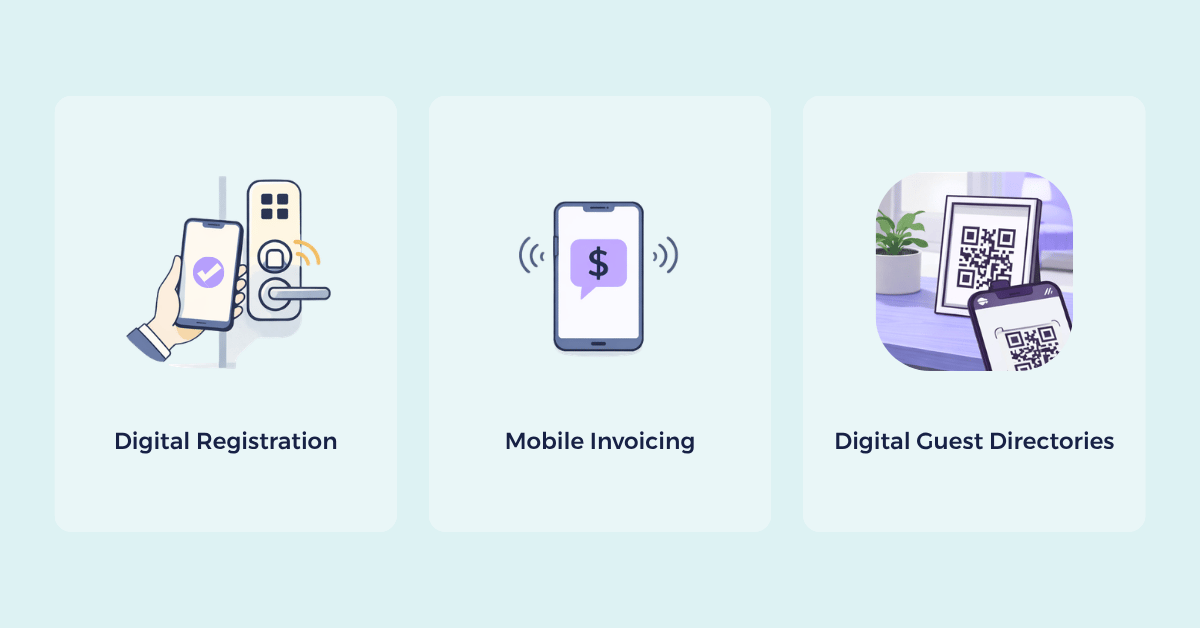
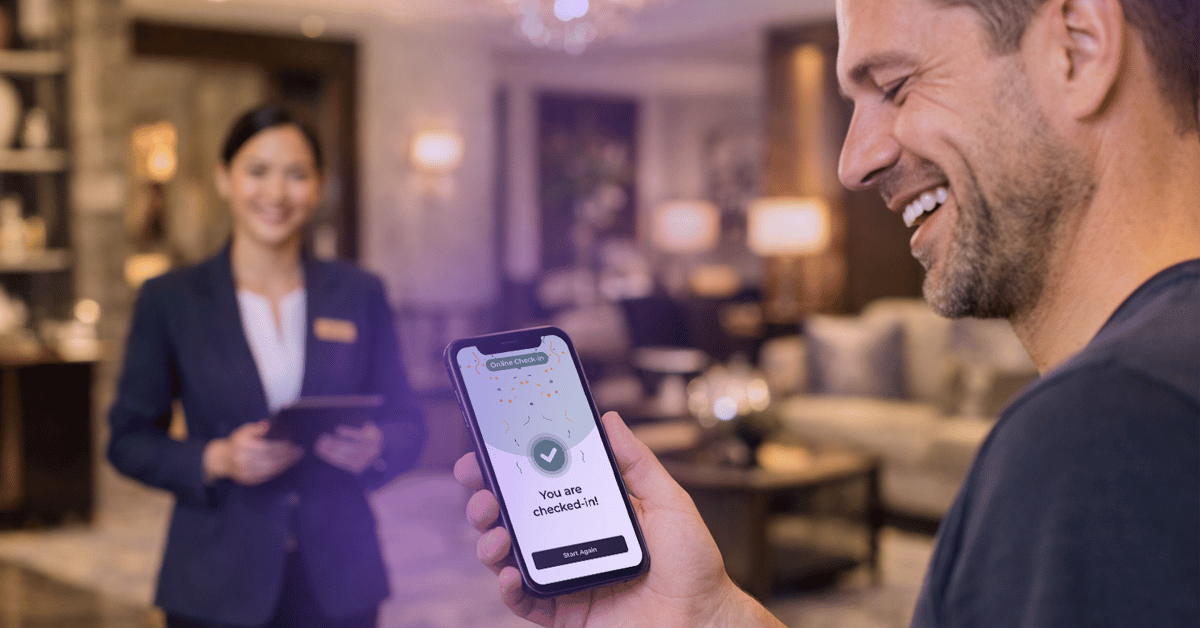
  • Digital Registration: Moving to digital registration cards eliminates tens of thousands of sheets of paper and plastic cards per year. It also improves data accuracy by removing the need for staff to manually transcribe handwritten details into the PMS.
  • Mobile Invoicing: Instead of printing a folio at checkout, guests receive a secure link to their invoice via a mobile web-app. This supports digital payment processing for green hotels, making sure that the entire financial transaction is carbon-light.
  • Digital Guest Directories: By replacing printed binders with QR-driven digital directories, hotels can update their menus or local recommendations in real-time without reprinting a single page.

This shift toward reducing paper waste with digital check-in is the most immediate way to signal your commitment to sustainability to your guests.
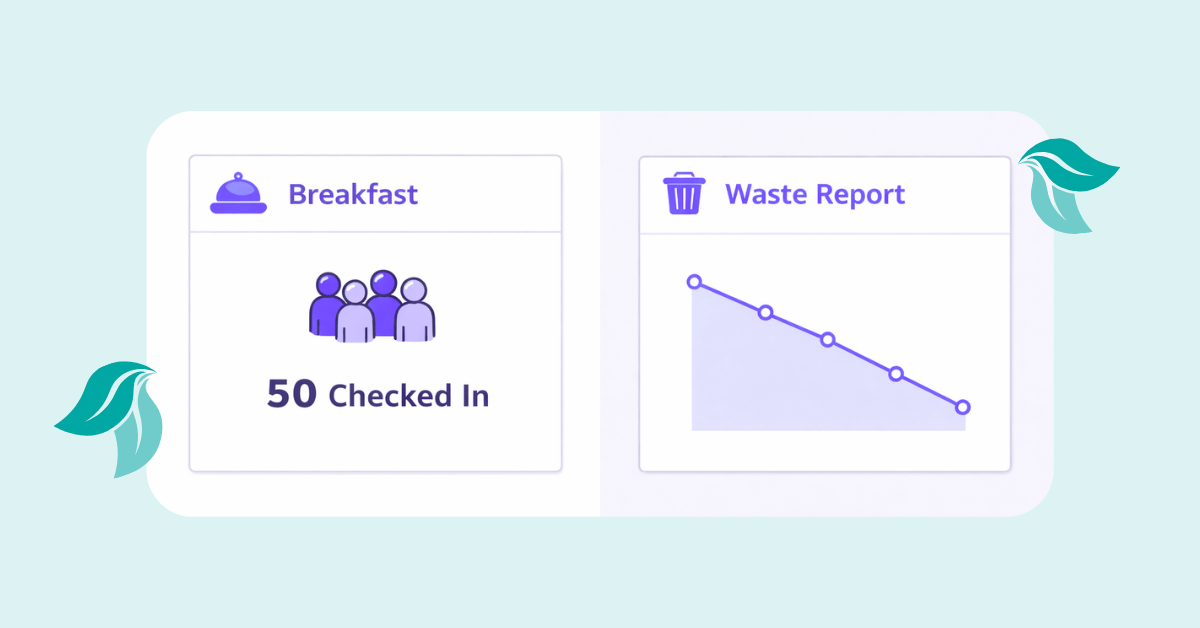
Reducing Food Waste with Centralised Data

Food waste reduction interface in a modern PMS.

Studies show that the hospitality industry loses a staggering $100 billion to food waste annually (Winnow Solutions, 2025). For an independent hotelier, this usually comes down to forecasting troubles.

Without centralised data, hotels can’t predict how much food they need, so naturally, they prioritise having too much food over having too little. This leads to huge quantities of wasted goods, typically discarded in unsustainable ways.

The green tech solution here isn’t a better fridge; it’s occupancy forecasting using centralised data. By using the advanced analytics of a high value PMS system, managers can view accurate occupancy forecasts to implement:
  • Dynamic Ordering: With data, your orders can be tailored to demand. For example, if your PMS shows a high volume of business travellers who typically skip breakfast, the kitchen can reduce its prep for the following morning.
  • Waste Tracking: By integrating waste tracking SaaS with your PMS, you can identify exactly which items are being thrown away. Perhaps the continental breakfast includes too much fruit that goes untouched? Centralised data allows you to pivot your menu based on actual consumption patterns rather than guesswork.

Benefits of Switching to Green SaaS for Hotels

The benefits of switching to a green SaaS for hotels.

Switching to an eco-friendly hotel software offers benefits that go far beyond bragging rights on your website. Here are just a few of the key benefits you can enjoy with a green hotel:

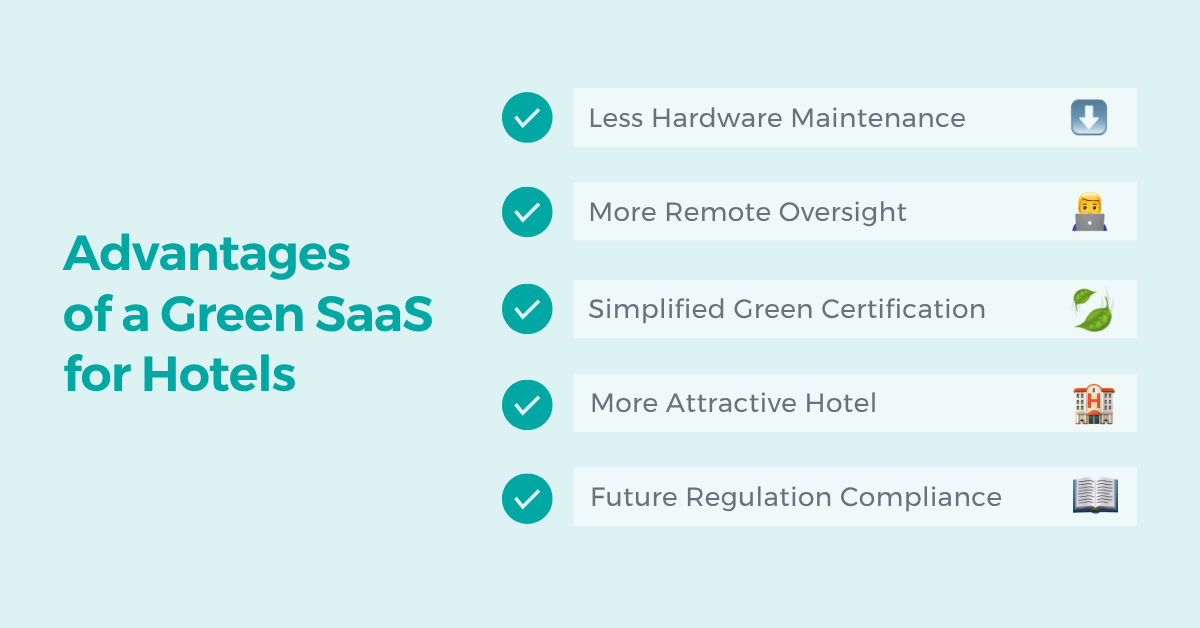
  1. Less hardware maintenance: Without on-site servers, there are no hardware fans to fail, no backup tapes to change, and no specialised cooling costs. This reduces the burden on your maintenance team, and dramatically slashes your extra costs.
  2. More remote oversight: Cloud-native SaaS allows your team to work from anywhere in the world. Reducing the need for staff to commute for every little administrative task indirectly lowers your carbon emissions and wage spendings.
  3. Simplified green certification: When aiming for certifications like the LEED, BREEAM, or the Green Key, having your operational data centralised in a cloud system makes the auditing process much faster and cheaper.
  4. More attractive hotel: Eco conscious tourism is on the rise, and travellers are often willing to pay a premium for a stay that aligns with their values. Highlighting your sustainable hotel technology in your marketing can increase your ADR significantly.

Future regulation compliance: Governments across the EU and UK are planning to adopt mandatory sustainability reporting for all businesses. By switching to a green SaaS now, you are meeting regulations before they become a legal headache.

Green SaaS Tech for Hotels: Wrap Up

Sustainability is quickly becoming an operational necessity for the hospitality industry. For the independent hotelier, transitioning can be as simple as optimising the digital infrastructure that manages your property.

By moving away from bulky legacy systems and paper heavy processes, you can solve the sustainability paradox by reducing your environmental impact and simultaneously increasing your profit margins. It’s a win win!

Why Noovy?

We believe that centralised software is the key to maximised sustainability. Our lean architecture is designed to be digitally lightweight, requiring minimal bandwidth and zero on-site hardware.

We provide the enterprise-grade tools independent hoteliers need to compete, without the enterprise-grade prices or carbon footprint.

Ready to see how Noovy can turn your property into a lean, green, profit-generating machine? Book a free demo today!

Frequently Asked Questions

Is cloud technology really better for the environment than on-premise servers?

Yes. Large-scale data centres are significantly more energy-efficient than local server rooms. They use advanced cooling techniques and often run on 100% renewable energy. Additionally, removing physical hardware from your hotel reduces your local electricity bill and e-waste.

What is an energy management system (EMS) for hotels?

An EMS is a network of IoT devices (thermostats, lights, sensors) that allows a hotel to monitor and control energy usage in real-time. When integrated with a PMS like Noovy, it can automatically "power down" rooms when they are unoccupied, saving up to 20% on utility costs.

How can SaaS reduce a hotel’s carbon footprint?

SaaS reduces a footprint by eliminating on-site hardware, digitising paper processes (like registration and invoicing), and providing the data analytics needed to forecast occupancy, which in turn reduces food waste and unnecessary energy consumption.

Does green hotel technology mean I have to sacrifice guest comfort?

Quite the opposite. Tools like smart thermostats ensure a room is perfectly pre-cooled or heated just before a guest arrives, providing a more personalised and comfortable experience than a room where the HVAC has been running aimlessly all day.

Share this post