Cloud Property Management Systems (PMS): Ultimate Guide For Hoteliers
-
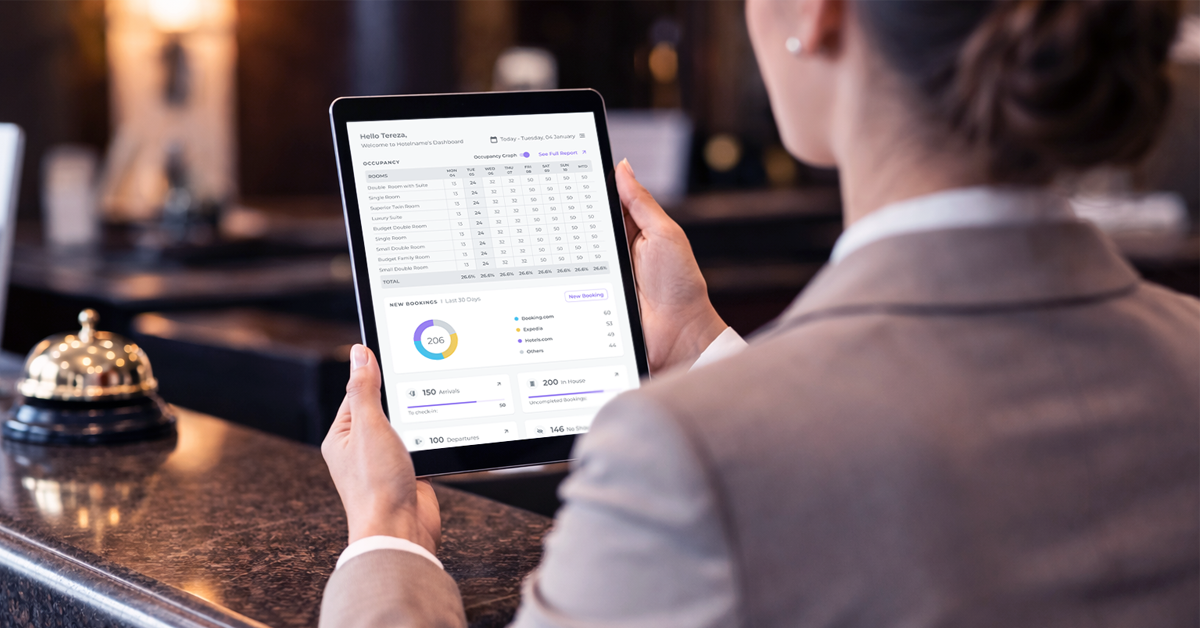
A property management system (PMS) is the central operation of your hotel, used for managing reservations, check-ins, payments and reporting all from one place.
-
Online cloud PMS platforms can save hotels more than 500+ hours of manual admin per year through automating administrative tasks (HospitalityNet, 2025).
-
Hotels using dynamic pricing tools during peak season can see up to 20% higher annual revenue compared to static pricing methods (Bale and Afiniki, 2024).
-
A modern PMS helps you reclaim majority of your guest records typically controlled by OTAs, allowing you to build direct relationships with your guests.
Running an independent hotel is no simple task. You’re balancing reservations, welcoming guests, managing rates, handling payments, overseeing housekeeping, and still trying to grow revenue. When your systems don’t cooperate, even small mistakes can create big operational headaches for you, your staff, and your guests.
That’s why a property management system (PMS) is non-negotiable in your hotel tech stack. This hotel management software serves as the digital nerve centre of your property, centralising reservations, check-ins, payments, and reporting into a single, automated platform. By replacing manual spreadsheets and paper ledgers with a cloud-based solution, independent hoteliers can automate admin work and refocus on guest-facing hospitality.
But with so many vendors available, how do you choose the right one? Our complete guide will walk you through everything you need to know to choose a PMS system that empowers your team, guests and revenue.
Got some questions about finding the right PMS for your property? Talk to an expert at Noovy today.
Table of Contents
Types of Property Management Systems (PMS)
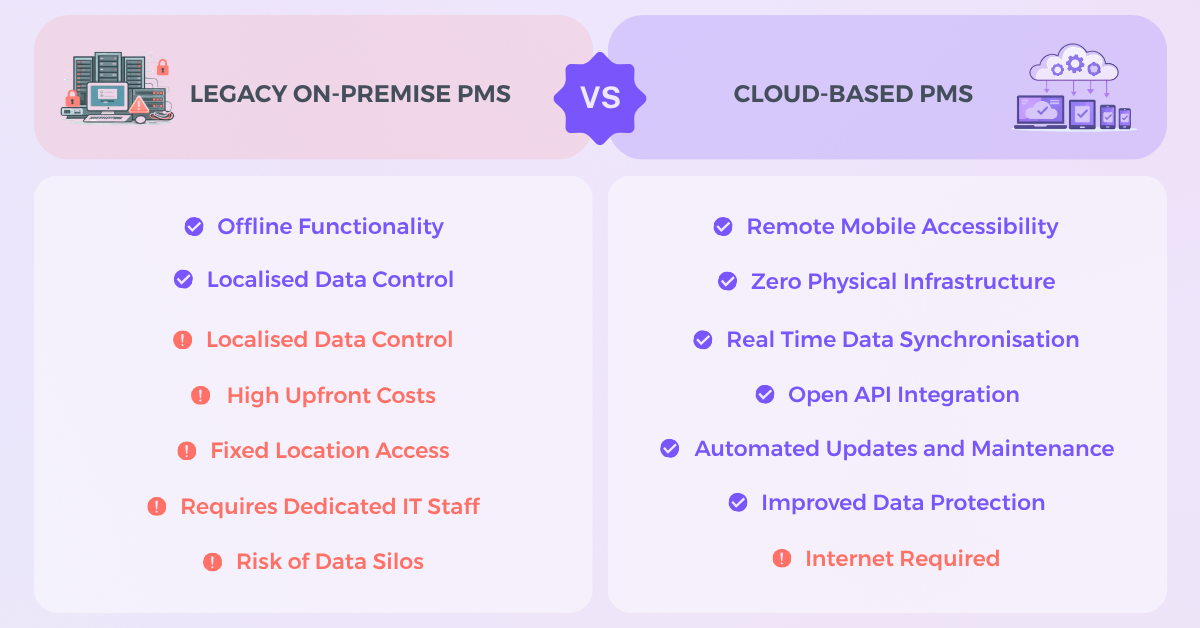
Hotel property management systems have come a long way since the days of paper logs and binders. Today, there are two main types of hospitality property management systems: legacy on-premise PMS and modern cloud PMS. Let’s take a look at both:
Legacy On-Premise PMS
Most early PMS solutions were largely on‑premise legacy systems; bulky servers sitting in back offices that required hardware, manual updates and onsite IT support. These were great solutions for properties in remote locations with poor connectivity, but high upfront costs, and complex operational needs made them a headache in the long term. These systems:
- Required expensive hardware
- Needed on-site IT support
- Required manual updates
- Came with high upfront costs
Legacy systems struggle to integrate with modern tools like booking engines, revenue software or automated guest messaging platforms, often leading to data silos; when different departments can’t easily access or share information with each other.
As technology evolved, these systems became restrictive.
Online Cloud PMS
With advances in digital connectivity and software‑as-a‑service (SaaS), the online cloud‑based PMS has taken over as a modern hotel essential.
Cloud PMS systems are browser-based and hosted off-site. You log in securely from any device with internet access. That way, hoteliers no longer need to invest in local servers or worry about backups; the tech vendor handles the updates, security and infrastructure. With a cloud PMS:
- No local servers are required.
- Updates happen automatically.
- Security and backups are handled by the provider.
- Subscription pricing spreads costs over time.
- Staffing challenges are minimised due to easy onboarding.
This shift means independent hotels can adopt enterprise‑grade tools without enterprise‑grade budgets. Cloud PMS platforms also integrate with booking engine APIs, channel managers, CRM tools and payment systems, all in real time.
In short, cloud PMS technology has democratised hotel management, making data activation and specialised operational tools accessible even for small boutiques.
5 Reasons Your Hotel Needs a Modern PMS
In the fast paced industry of modern hospitality, manual systems simply can’t keep up. A cloud-based hotel property management system ensures your business has an operational backbone it can truly rely on for years to come.
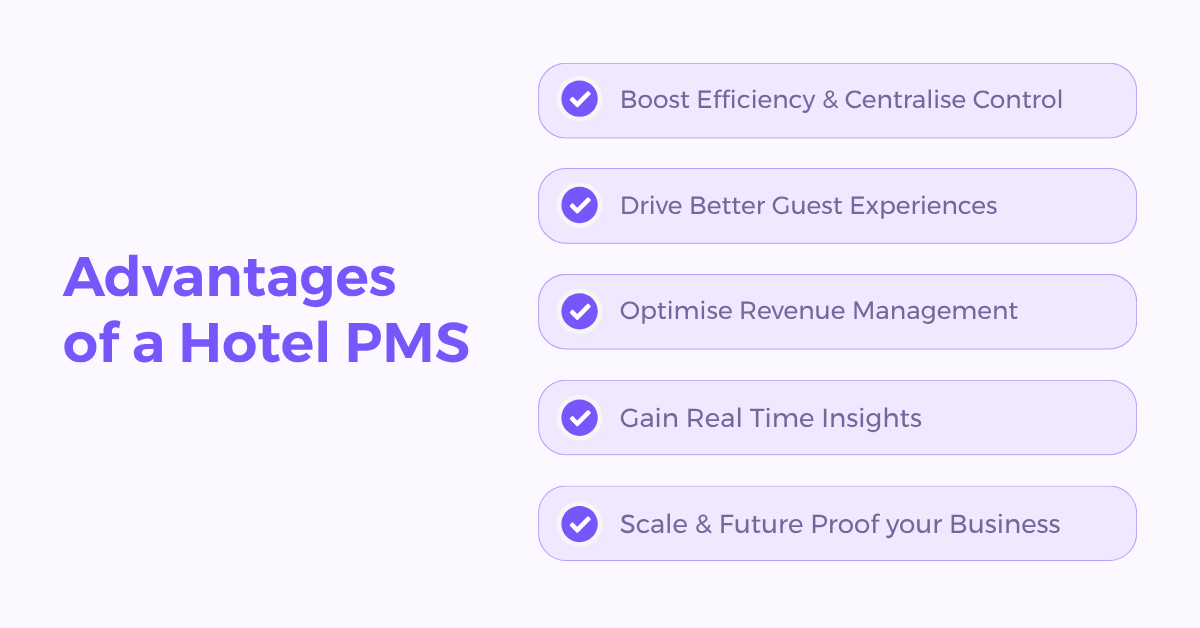
Wondering why upgrading to a modern PMS is no longer optional for independent hoteliers? Here are five key advantages of a property management system in hotels:
Boost Efficiency and Centralise Control
A hotel property management system automates routine tasks, reduces manual data entry and keeps everyone on the same page. By centralising reservations from your website, OTAs and walk‑ins into a single calendar, you eliminate double bookings and administrative errors.
Staff can assign rooms, issue key cards and handle guest registrations directly through the system. This streamlines workflows so your team spends less time clicking and more time taking care of guests.
Deliver Better Guest Experiences
When you know your guests, you can personalise their stay. An online property management system can store guest profiles, preferences and past stays, allowing staff to anticipate needs and surprise returning travellers. By automating confirmation emails, arrival instructions and follow‑ups, you can ensure timely communication.
In fact, up to 61% of travellers value personalised recommendations and services (Data Axle, 2025). Faster check‑ins, personalised service and proactive messaging add up to happier guests and better reviews.
Optimise Revenue Management
Hotels can no longer rely on gut feelings to set prices. Modern hotel property management systems incorporate dynamic pricing tools that analyse local demand, competitor rates and historical data to recommend optimal rates.
Properties that adopt dynamic pricing see 15 - 30% higher annual revenue than those using static seasonal pricing (Hotel Tech Report, 2025). A PMS also ensures consistent rates across channels, preventing rooms from being underpriced or oversold. With automated yield management and revenue dashboards, you maximise RevPAR without manual spreadsheets.
Gain Real‑Time Insights
You can’t improve what you don’t measure. A cloud PMS includes reporting and analytics tools that generate one‑click reports on occupancy, ADR, RevPAR and booking sources. Daily dashboards help you spot trends, adjust rates and respond to demand spikes faster. This data‑driven decision‑making leads to smarter strategies and a healthier bottom line.
Scale and Future‑Proof Your Business
As your property grows, you’ll need a system that scales with you. When evaluating options, consider whether the PMS can handle multiple properties, integrate with your existing tools and adapt to new technology.
Cloud PMSs are suitable because updates and integrations are handled entirely by the vendor, ensuring your hotel software stays current without costly upgrades. The important caveat here is to ensure you work with a vendor that comfortably meets your needs.
Essential PMS Features to Look For
With no shortage in PMS vendors, making the right choice can seem overwhelming. That’s why it’s important to outline your budget and needs to help guide your decision. The best PMS for your hotel will free your staff to focus on guests while driving higher direct revenue. Here are some essential features you should look out for:
-
Integrated Direct Booking Engine
Every booking through an OTA comes with a typical commission of 15 - 30%, cutting into your profits. An integrated booking engine lets your guests skip the middle man by booking directly from your website, saving those fees and keeping the guest entirely in‑house. -
Built‑In Channel Manager
To avoid overbookings and rate inconsistencies, your PMS should include a two‑way channel manager. This synchronises your website in real time with hundreds of OTAs, so that when a room is booked on one channel, it’s removed from all others.
Beyond saving hours of manual work, a centralised channel manager also increases your search visibility, resulting in an average 38% increase in bookings (HospitalityTech, 2025).
-
AI‑Powered Guest Messaging
Guests expect quick answers, but no team can monitor communication channels 24/7. That’s where a virtual concierge comes in handy. Automated guest messaging tools send confirmations, arrival instructions and post departure thank you’s without any human intervention necessary.
More advanced LLMs, such as Noovy’s AI Messaging Assistant, even answer questions about Wi‑Fi passwords or late check‑outs using artificial intelligence. This frees staff for face‑to‑face service and keeps communication consistent. -
Automated Front Desk & Online Check‑In
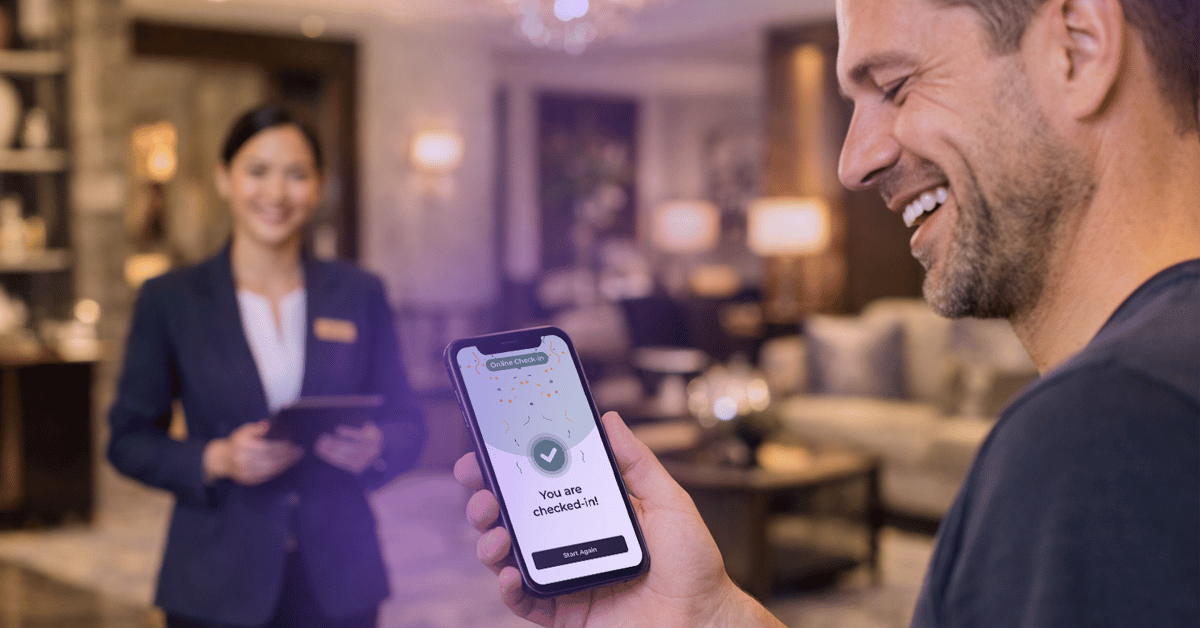
With today’s technology, long reception queues are quickly becoming a relic of the past. The best PMS should offer online check‑in and digital key integration, allowing guests to head straight to their rooms with little disruption upon arrival.
Digital registration cards, self‑service kiosks and other smart check-in tools speed up arrival while the PMS updates guest status automatically. Reducing queues greatly improves first impressions and frees your front desk to handle more complex queries guests might have. -
Housekeeping & Maintenance
Real‑time room status is critical for turning rooms around quickly. Digital housekeeping modules assign tasks, track whether a room is clean, dirty or under maintenance and notify the front desk the moment a room is ready for guests.
Properties that digitise their housekeeping workflows report 20% faster room turnover times, keeping guests happy and the hotel operation smooth (Dataman, 2024). -
Smart Revenue Management
An effective PMS should do more than just store rates; it should also help you set them. Revenue management dashboards display key metrics such as occupancy, ADR, RevPAR and channel performance, and provide demand forecasts.
Tools like dynamic pricing suggest optimal rates based on demand, competitor rates and events. Hotels using dynamic pricing achieve up to 20% higher revenue (Hotel Tech Report 2025).
-
Comprehensive Guest CRM
Repeat guests spend more, but only if you remember them. Your PMS should include an integrated customer relationship management (CRM) module that stores contact information, booking history, preferences and special requests.
Some reports suggest that 68% of guests report high satisfaction when hotels remember their preferences (Gitnux, 2025). To elevate your guest experience, look for CRMs that provide automatic profile creation, GDPR‑compliant consent management and segmentation tools for targeted offers. -
Secure, Integrated Payment Processing
Manually typing credit card numbers into a terminal is slow and error‑prone, with studies suggesting an average 1% error rate. But don’t be fooled, with countless data entries, reports, and calibrations, that 1% can compound, resulting in up to 40% of data sets potentially containing faulty data (Beamex, 2021).
Integrated payment processing eliminates this risk by handling deposits, full payments and refunds directly within the PMS. Contactless payment automation reduces error rates to under 0.1%, saving thousands of euros in prevented chargebacks. Ensure your PMS is PCI‑DSS compliant, supports multiple payment methods and offers automated payment reminders. -
Real‑Time Reporting & Analytics
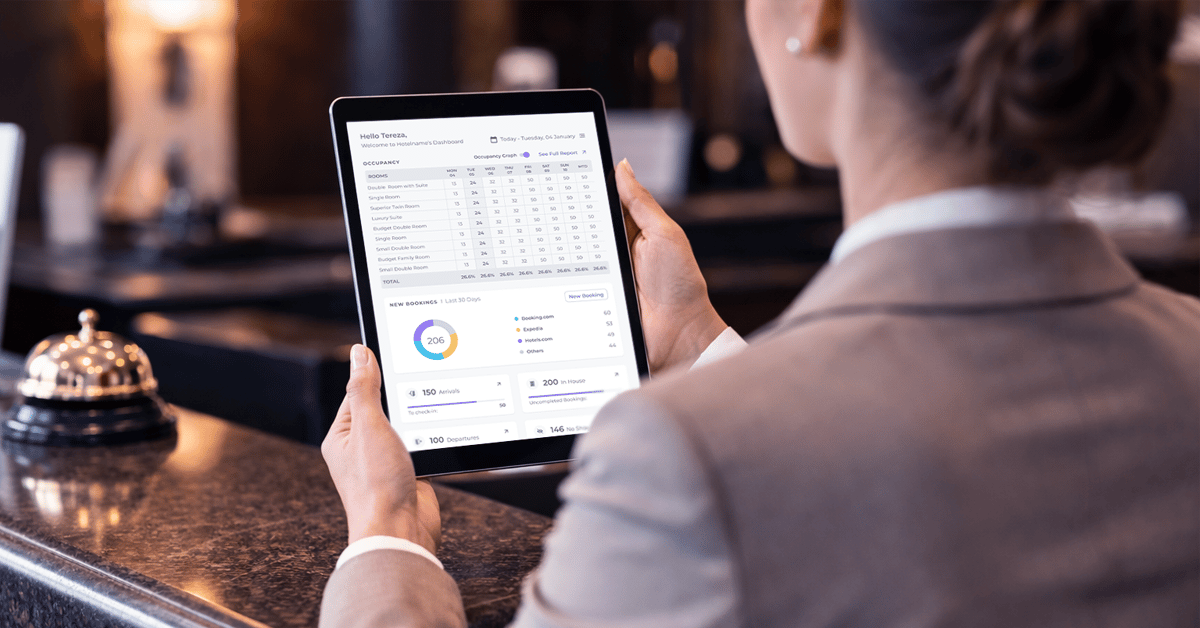
You need real‑time data to make informed decisions. A good PMS offers dashboards and reports that track occupancy, ADR, revenue, booking sources and pickup trends, giving you a complete picture of hotel performance at the click of a mouse.
Some studies suggest that hotels who review daily dashboards adjust their rates three times more often and achieve 8–12% higher RevPAR than those using weekly or monthly reports (HFTP, 2025). -
Open API & Third‑Party Integrations
With a good PMS, no hotel software sits in a vacuum. Your chosen system should integrate with all your relevant channels, such as accounting, guest messaging, payment gateways and smart devices. Open APIs allow you to connect to new tools in the future and avoid vendor lock‑in.
-
Mobile Access
Hotel managers spend several hours each week working away from the property, but this doesn’t have to mean their hands are tied. A mobile‑responsive PMS or dedicated app lets you view bookings, approve refunds and respond to issues from any device. Real‑time push notifications ensure you never miss an urgent booking, while offline functionality syncs once you’re back online.
If you’re ready to see how a modern, fully integrated PMS can activate your data, reduce admin and drive more direct revenue, the next step is simple. Book a personalised demo and see it in action!
How to Choose the Right PMS: A Step‑by‑Step Framework
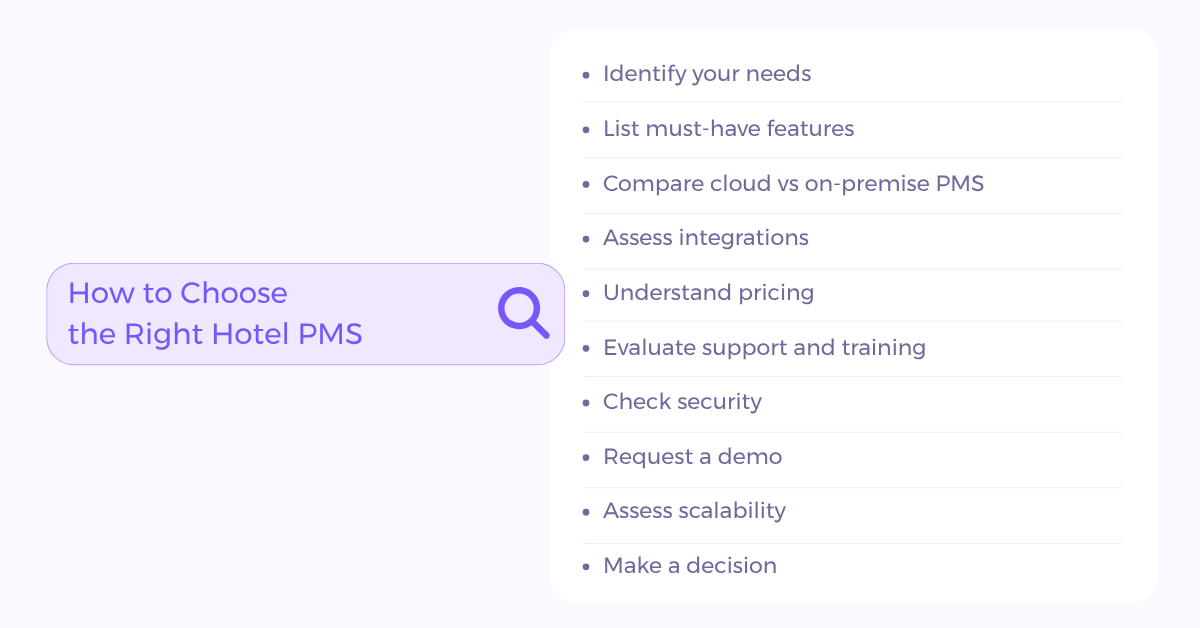
Selecting the right online cloud PMS for your hotel can feel overwhelming with all the vendors on the market, but breaking down the process into steps makes it manageable. Here’s our proven framework to help you choose the right fit for you:
-
Identify Pain Points
Start by identifying your challenges (double bookings, manual payment reconciliation, slow reporting) and the goals you want to achieve. This ensures that you choose a PMS system with features geared to solve your problems. Engage department heads throughout your hotel to understand their priorities, whether it’s housekeeping efficiency or improving direct bookings. -
List Must‑Have Features
Which features are non‑negotiable for your property? A small boutique hotel might prioritise simplicity and automation, while a resort might be more curious about how to improve their sustainability with green hotel technologies. By aligning PMS features with your pain points, you avoid paying for functionality that you won’t use. Make sure to use our essential features list above as a checklist!
-
Compare Cloud vs On‑Premise PMS
Decide whether a cloud or on‑premise PMS suits your infrastructure and budget the best. On‑premise systems require local servers and dedicated IT support, whereas a cloud PMS is accessible via browser, updated automatically and reduces upfront hardware costs. In most cases, the benefits of an online cloud PMS greatly outweigh that of an on-premise PMS.
To identify the best fit for your hotel, evaluate your internet reliability, IT resources and the need for remote access and monitoring.
-
Assess Integrations
List the third‑party tools you currently rely on: accounting software, guest messaging apps, payment gateways, smart locks, point‑of‑sale systems. Wouldn’t it be wonderful if all these existed in one hotel software?
To make the best choice, find a hotel PMS that contains a broad range of tools, or at least allows for integration via an open API. Seamless integration saves countless hours of work, prevents data silos and futureproofs your tech stack. -
Understand Pricing
A hotel property management system cost can vary widely. On‑premise solutions have much higher upfront costs, while cloud systems typically charge a monthly subscription. On average, independent hotels pay €50 - €200 monthly depending on their PMS features and room count.
When choosing a hotel PMS, pay attention to setup fees, payment processing fees and support charges. A more expensive plan may end up saving you money in the long run if it includes built-in channel management and dynamic pricing.
-
Evaluate Support and Training
Look for vendors that provide dedicated onboarding, data migration assistance and staff training with a subscription. You want multi‑language support, phone and chat options, and fast response times. Good training ensures your team adopts the new system quickly and uses all features effectively. -
Check Security
Security is vital, as sensitive guest data and payments must be protected. Ensure the PMS you choose complies with data protection regulations (e.g. GDPR) and PCI‑DSS standards for payment security. When onboarding, make sure to ask about extra measures you can take, such as encryption, access controls and data residency. -
Request a Demo
Try before you buy! Schedule demos with two or three of the shortlisted providers you resonate with. Have your staff test everyday tasks like making a reservation, modifying a booking and generating a report to see how they adjust.
You can speak with existing customers running similar properties and test the interface yourself. If a demo feels too complicated for you, it’s worth considering how it will perform in daily use.
-
Assess Scalability
Your hotel PMS should grow with you. When looking at your options, make sure to ask vendors about their product roadmap. What new features do they plan to release? How do they retain their clients? You can also research online reviews and industry reports to check their reliability. -
Make a Decision
Once you’ve done your research, compare the costs and weigh the benefits of your shortlisted tech vendors. Consider not just the software but the people behind it; the support, training and company culture which you will likely rely on through the process. Remember, there is no one “right” PMS, and the best choice for you will hinge on your budget and needs.
Property Management Systems: Wrap Up
Selecting the right online property management system is one of the most important decisions you’ll make as a hotelier. It serves as the foundation of your hotel’s profitability, guest experience and long-term growth, giving you the clarity to make smarter decisions every day; all through one intelligent platform.
Why Noovy?
Noovy is an all‑in‑one cloud platform built by hoteliers, for hoteliers. But what makes us truly special?
We bring your PMS system, booking engine, channel management, payments and AI guest messaging all into one seamless cloud platform built specifically for independent hoteliers like you. Instead of juggling multiple tools and losing data between systems, you operate from one centralised dashboard designed to activate your data and protect your margins.
If you’re ready to simplify operations, increase direct revenue and future-proof your property, book a free personalised demo with Noovy today!

Frequently Asked Questions
What is a property management system (PMS)?
A property management system (PMS) is software designed to help hotel owners and managers coordinate reservations, check‑ins, room assignments, payments and reporting from one platform. Modern systems centralise these functions and integrate with other tools like channel managers and revenue management software.
What are the benefits of a property management system?
Using a PMS enhances efficiency by automating routine tasks, reduces errors and shortens check‑in times. It improves guest experiences through personalised service and timely communication. A PMS system also supports better revenue management by maintaining consistent rates across channels and enabling dynamic pricing. Finally, it provides real‑time analytics so you can make data‑driven decisions.
What is a CRM system?
A Customer Relationship Management (CRM) system stores customer information, including contact details, booking history and preferences. When integrated into your PMS, a CRM allows you to personalise communication and tailor offers to guests. Remembering preferences can double the revenue from repeat guests.
What is the best property management system for independent hotels?
While there is no single best property management system that fits all hotels, your decision will mainly hinge on your immediate needs, available budget, and prospect of future growth. Noovy provides an all in one solution PMS and hotel tech stack that is transparently priced at just €5 per room, with 24/7 support included.