

Monthly Revenue Leakage = (E x ADR) + C
E: The number of manual booking errors or overbookings per month.
ADR: The hotels Average Daily Rate.
C: The cost of compensations, penalties, or re-accommodations.


The work to keep an independent hotel afloat in the modern industry is humbling. However, general managers who manually juggle arrivals and departures, invoices, and complaints all at once, are often missing key optimisation opportunities.
Independent hotel management in the modern industry shouldn’t require backbreaking labour and team burnouts. In fact, modern hotelier technologies are able to automate up to 30% of hotel tasks (HospitalityNet, 2025), empowering existing staff by reducing the risk of turnover, improving work-life balance, and making guests central to the work experience once again.
This complete guide identifies the core bottlenecks in daily hotel operations and introduces simple, cloud-based solutions and AI tools for small hotels that can transform a struggling operation into a smooth, profitable business that runs itself.
Looking for a partner to maximise your hotel performance with? Look no further than Noovy. Book a free demo with our experts and meet our modern tech stack!
When researching how to run a small hotel successfully, it’s easy to get caught up in endless corporate strategies and marketing gimmicks. However, independent hoteliers need to recognise that the majority of these strategies are set up for major corporate chains with dedicated departments and large budgets.
For independent operators and boutique hoteliers, a small, tactical team serves as the revenue managers, the HR department, and the front-desk agents all at once. For this reason, overcoming labour shortages is crucial for boutique hotel operations.
| Corporate Hotel Chains | Independent Boutique Hotels |
| Big corporate departments and teams. | Small staff pool skilled in multitasking. |
| Huge software budgets and systems. | Limited business spending. |
| 24/7 on-site technical support. | General manager handling local IT. |
With this in mind, an independent hotel's biggest strength is structural efficiency. Every hour spent conducting a mundane task is an hour out of the hotel's profits. When staff spend hours on manual paperwork and system bottlenecks, guest service suffers, checkout lines grow, and the arrival experience declines. Best hotel management practices require putting efficient systems in place from the very beginning.
When running a small hotel without modern management systems, the most common issue is the sheer amount of manual labour. An expansive study identified that up to 80% of hotels spend up to two full work days a week just to create hotel reports (State of Distribution, 2025). When a property relies on paper logs, spreadsheets, or disconnected systems, teams get stuck doing repetitive shadow work that brings no tangible value to the business (e.g. manually typing guest details from email confirmations into a calendar).
Picture a front desk member starting their night-audit paperwork at midnight, after a long shift that started at 6:00 in the morning. That level of fatigue causes mistakes, lowers staff morale, and makes it incredibly difficult to retain great employees.
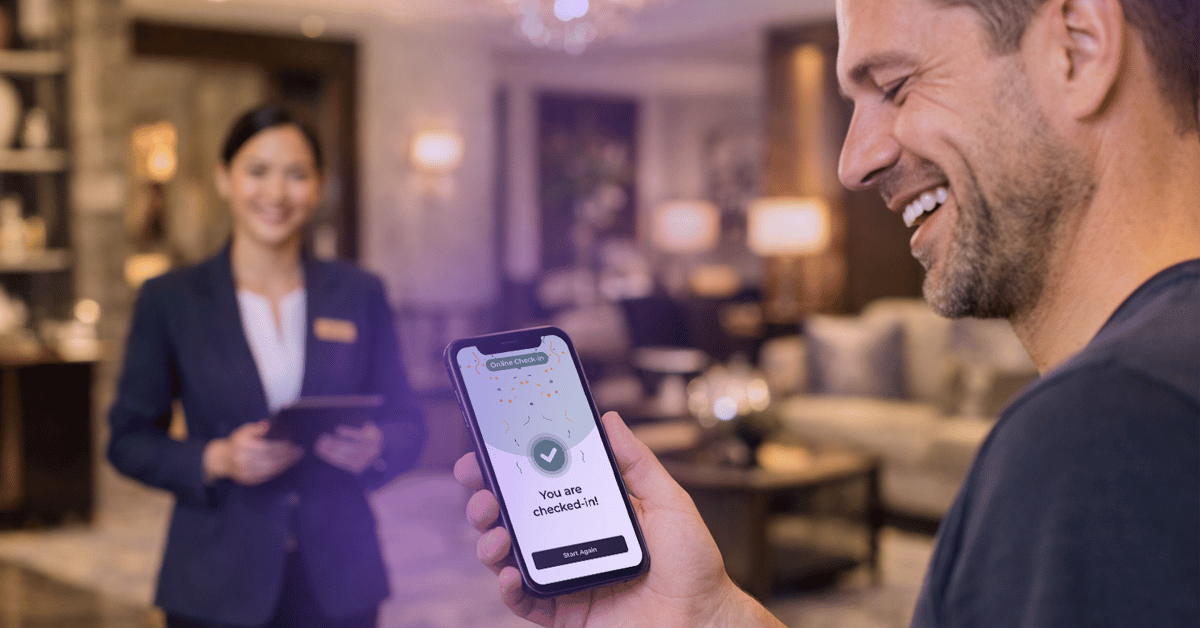
By switching to a cloud-based hotel management software, boutiques can automate guest registration, pre-arrival and check in, removing administrative burden from the front desk, and empowering them to be true hosts. Here’s a digital workflow for how a unified tech stack works to achieve this:
This combined approach reduces front-desk paperwork, cuts check-in times down to mere seconds, and helps prevent staff burnout.
In small properties, internal communications can be messy. WhatsApp chats, sticky notes, printouts, and radio calls all fragment information further. This creates data silos between departments, where valuable information ends up being hidden away in singular departments or staff, instead of being accessible across the entire hotel.
Miscommunications can negatively impact the guest experience. A misplaced tick on a spreadsheet falsely claiming a room is “clean” can result in a tired guest arriving into a room with dirty linens. This instantly harms guest satisfaction and forces the front desk into a defensive position.
A centralised small hotel management system is not just there for automation, but also for oversight. A modern hotel tech stack that communicates with each other is able to collect and aggregate both hotel and guest information into a single, organised place. Some of the information a modern hotel operating system can aggregate are:
Many independent properties still use outdated, on-premise hotel software that is hooked up to a physical computer terminal. These old systems come with high maintenance costs, require manual server backups, and take weeks for new staff members to learn. Furthermore, these systems do not support remote access, meaning guest, property, and booking data cannot be added, removed or amended without logging in at the front desk.
Upgrading to a modern, web-based property management system (PMS) empowers general managers to handle bookings safely from any laptop, tablet, or smartphone, no matter where.
Additionally, a PMS for small hotel operations provides unified and intuitive workflows, reducing employee onboarding time from weeks to hours. In an industry with historical staff shortages, this low entry bar for onboarding is an important survival tool.
Many properties still practice traditional pricing, such as flat seasonal rates for the summer and winter. This manual approach ignores daily, even hourly shifts in local and international demand. Expedia Group identified that up to 98% of surveyed hotels reported yearly revenue loss due to poor room rate forecasts (Expedia Group, 2025).
For any hotelier, it’s incredibly frustrating to find out about a local demand surge too late. Whether a concert or a conference, demand surges provide competitors the opportunity to fill up rooms at premium rates, while traditional hotels are left with rooms booked months in advance, still at baseline prices.
Implementing a modern, proactive small hotel revenue management system (RMS) is anything but complicated. Running complex algorithms informed by a range of data points, an RMS system can dynamically adjust hotel room rates based on occupancy thresholds all by itself.
As empty rooms start to fill up, room rates are raised automatically by the RMS across all channels. This protects a hotel's profit margins against inflation and rising operational costs without requiring a dedicated manager to watch the market 24/7.
When buying operational software, hotels often make the mistake of not seeing the bigger picture. By purchasing a PMS from one provider, a standalone channel manager from another, and small hotel booking software from a third, hotels can create software communication issues.
Forcing disconnected systems to talk to each other through expensive API integrations creates a technical headache and a new financial drain for the hotel. More so, each tool exists on its own web browser tab, forcing general managers to spend countless hours navigating a mess of landing pages and dashboards.
Instead of purchasing a fragmented landscape of standalone softwares, hoteliers should aim for smart tech vendors that provide an all in one platform that combines a PMS, RMS, channel manager, and more; all into a single system. These small hotel management softwares completely eliminate data delays, lower software costs, and automatically sync bookings, OTA channels, and folios into one place.
To help establish a proactive, organised hotel operation, the common bottlenecks of hotel management need to be addressed. Here’s a quick check hoteliers can conduct on their current hotel workflow to identify room for improvement:
By addressing hotel operation bottlenecks and introducing modern, tech-driven solutions, hotels can save up to 10 hours a week on manual labour alone (Hotel Speak, 2026).
Beyond daily operational headaches, running a hotel with outdated practices carries a high risk of human error and financial loss. A hotel can calculate their property's monthly revenue leakage from manual data entry and calendar typos using a simple formula:
For example, if a 25-room hotel experiences two booking errors a month with an ADR of €150, and faces a €100 compensation penalty for each incident, this means:
Monthly Revenue Leakage = (2 x €150) + (2 x €100) = €300 + €200 = £500 p/m
Losing €500 every single month to avoidable manual mistakes easily covers the subscription cost of a modern, cloud-native automation platform.
Independent hotels don’t need massive, corporate teams or big budgets to run a boutique property. What’s needed is a replacement of outdated, manual processes with hotel management software for small hotels that do the heavy lifting for you.
That way, lean hotel teams can focus on guest-first services while an accurate, digital machine handles complex matters such as demand forecasting, pricing and bookings.
As the best hotel management software for small hotels, Noovy is built specifically to address the unique operational challenges faced by independent hoteliers. Our cloud-native platform brings property management, real-time channel synchronisation, mobile housekeeping updates, and automated guest messaging together into one simple dashboard.
By eliminating the need for disconnected tools and manual spreadsheets, Noovy gives your team hours back every week, removes the stress of overbookings, and helps you focus on what matters most: taking care of your guests.
Ready to elevate your hotel experience? Book a free demo with a Noovy expert today and get acquainted with our modern, unified tech stack!