Hotel Guest Experience & Customer Satisfaction: The Ultimate Guide
-
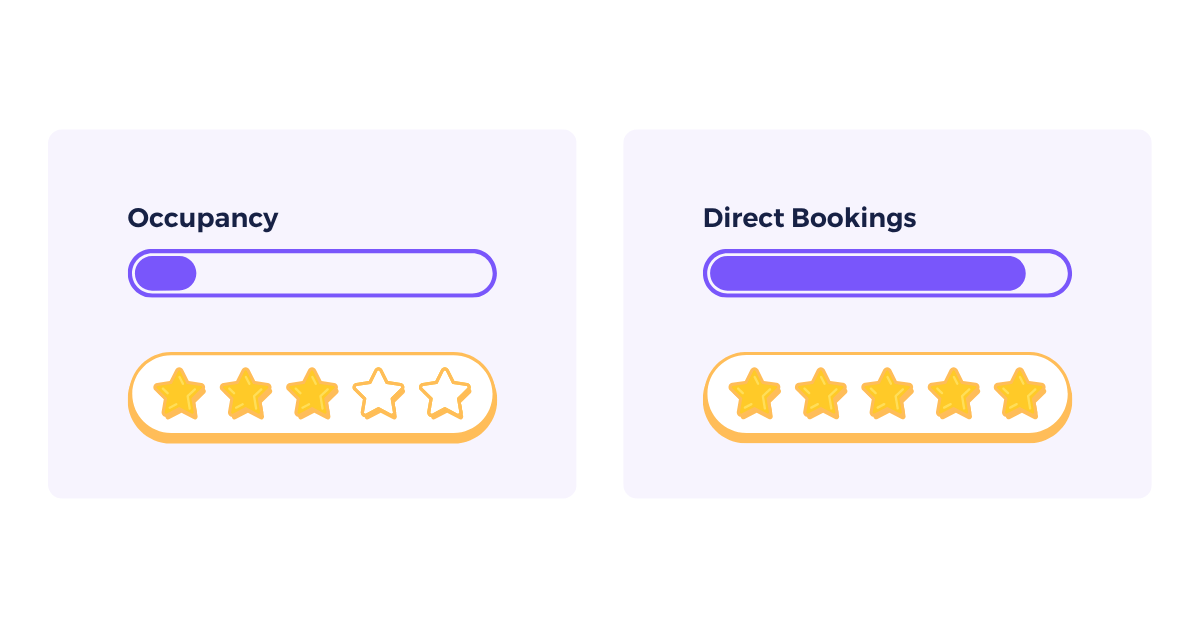
Hotels with higher guest satisfaction scores consistently outperform competitors in both review rankings and booking conversions.
-
72% of hotel visitors say they are more likely to return to a hotel if the staff remembered their name and preferences (WifiTalents, 2026).
-
Nearly 80% of review site visitors are more likely to book a hotel with a higher rating when choosing between identical hotels, and up to 52% agree that they would never book a hotel that has no reviews (TripAdvisor, 2025).
Hospitality has always been a people first industry, yet guest expectation was never a static concept. Over the past decade, guest expectations have changed dramatically to expect the seamless digital convenience from hotels that they receive from airlines, ride-sharing apps, and e-commerce platforms.
At the same time, independent hoteliers continue to face the mounting pressures of staff shortages, high OTA commissions, and guests who seek standards and experiences fit to global brand budgets from local boutique hotels.
Luckily, independent hotels possess a powerful advantage. Authenticity and flexibility. Whilst global brand hotels must simulate genuine experiences, local hotels can deliver a truly unique stay that is personalised to your liking. Powered by tech driven convenience,
This ultimate guide to hotel customer satisfaction will walk you through the strategic steps you can take to maximise your guests' positive experience, leading to higher revenues and customer loyalty for years to come.
Ready to upgrade your guests experience with a modern tech stack? Book a free demo of Noovy's CRM to get a first hand look at what sets us apart!
Table of Contents
- What Is Hotel Guest Experience?
- Why Guest Satisfaction Matters in Modern Hospitality
- Understanding The Modern Hotel Guest Journey
- Top Tips to Enhance Hotel Guest Experience
- Measuring Guest Satisfaction: NPS, GSS, Reviews and Feedback Loops
- How Technology Improves Hotel Guest Experience
- Data Activation: The Future of Guest Experience
- Hotel Guest Experience: Wrap Up
- Frequently Asked Questions
What Is Hotel Guest Experience?
A hotel guest experience refers to the full relationship between a traveller and a hotel across an entire stay. This begins long before the guest ever steeps foot into your lobby.
The first interaction starts when a traveller discovers your hotel online and initiates a booking. It continues with the hotel guests arrival and stay, and extends far beyond the checkout through post-stay communications and reviews.
Whilst traditional customer service is part of the guest experience, it’s important to outline a key distinction. Service refers to how staff interact with guests during the stay. Experience, by contrast, covers every single operational and emotional interaction across the entire journey.
Guest Experience vs Customer Service
-
Customer Service: Support provided to guests during their stay, typically through staff interactions.
-
Guest Experience: The entire end-to-end journey of a guest; from discovery to post-stay engagement and everything in between.
A beautifully designed room or a welcoming receptionist is only part of the experience, as guests evaluate their overall journey. How easy was the booking? How quickly did they check in? How personalised did the service feel?
Why Guest Satisfaction Matters in Modern Hospitality
Guest satisfaction in hotels has always been a cornerstone of hospitality, but in today’s highly competitive modern travel ecosystem, it carries a far greater strategic weight.
Review and booking sites mean that every guest is effectively a public voice. In fact, over 81% of travellers read reviews before booking accommodation (TripAdvisor, 2026), meaning that a single review can influence hundreds of potential bookings down the line.
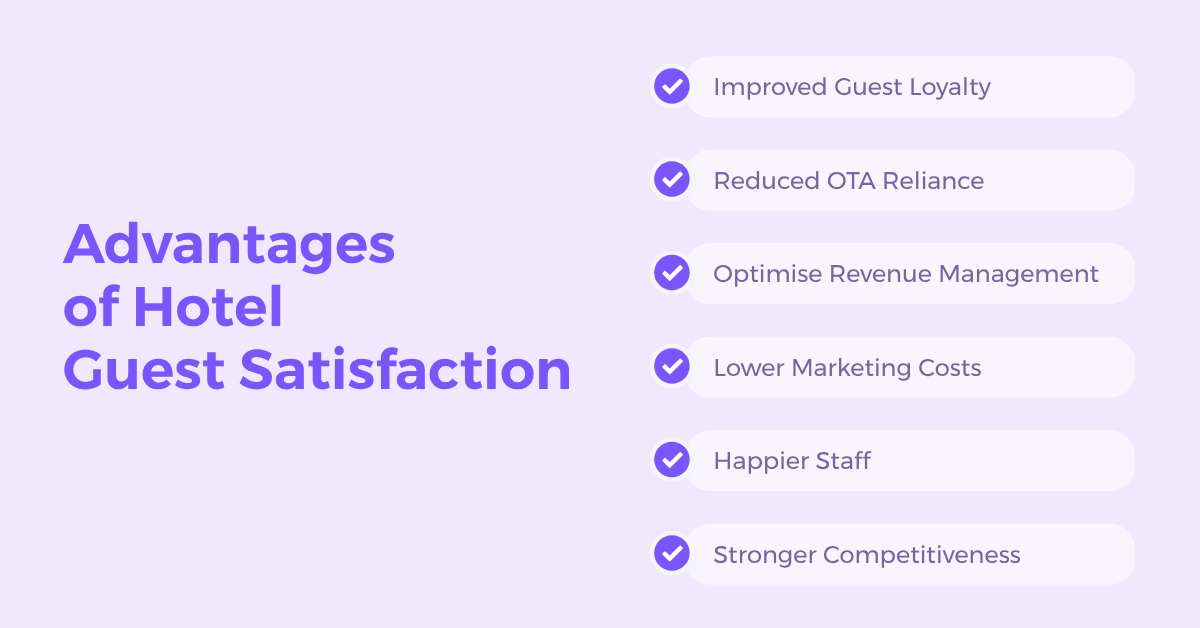
A positive guest satisfaction score comes with some key benefits, such as:
-
Improved Guest Loyalty: Travellers who have positive experiences are far more likely to return to the same property, and repeat guests typically spend more money during their stay. This includes the upselling of dining, amenities, and extended stays.
-
Reduced OTA Reliance: When travellers choose to book directly with a hotel, the property avoids paying substantial commission fees to an intermediary OTA. In addition to better profits, these hotels also enjoy the benefits of unmasked guest contacts, such as pre-arrival upselling and post-stay marketing.
-
Lower Marketing Costs: A positive hotel reputation, combined with a loyal guest base means you will have to spend less money on marketing and acquisition campaigns to attract new guests constantly. This freed up revenue improves your bottom line, and opens opportunities for hotel upgrades.
-
Happier Staff: A positive service environment is directly linked to a happier, more stable staff base (ResearchGate, 2014). Happier staff leads to more retention and less need for seasonal hiring, as well as an improved guest relationship.
-
Stronger Competitiveness: For independent hotels, strong reviews can help them easily outperform even the largest competitors with a weaker reputation. Ultimately, every traveller wants to make the choice that will bring them the best experience.
Understanding The Modern Hotel Guest Journey
If you’re wondering how to improve guest experience in a hotel, then we need to understand the guest journey. More than just a single event, the hotel guest experience journey is a series of interactions that unfold over time. To make sure your guests' satisfaction is high, addressing each stage is an important step. A typical guest journey can be divided into three key phases:
- Pre-Stay: Hotel discovery, review checking, booking, pre-stay communications and pre-arrival upselling.
- Stay: Guest experience during their time at the hotel, such as check-in and checkout, hotel amenities, cleanliness, treatment by staff, and other customer service markers.
- Post-stay: Begins after the guest checks out of the hotel, and includes guest reviews, post-stay communications and marketing.
Each phase of the hospitality customer journey contains opportunities to enhance guest experience and build further loyalty. Let’s take a closer look at each step.
Pre-Stay: Websites, Bookings, and Communications
The first meaningful interaction between a guest and a hotel typically occurs on the internet; either through the hotels direct website or an OTA. This crucial moment decides whether a guest continues exploring the hotel, or abandons the booking process entirely.
A slow website, unclear pricing, or complicated booking interface can immediately undermine trust. By contrast, a clear and intuitive booking journey reassures guests that the property is professional and organised. Guests typically look for:
-
Fast Loading Speed: Studies show that 53% of mobile users abandon a website if it takes more than 3 seconds to load (Google, 2025). Sluggish websites that are prone to crashing can negatively impact the user experience, with some frustrated users giving up on the booking process entirely.
-
Mobile Optimisation: An average of 65% of travellers typically book their stay from a mobile device (Worldmetrics, 2025), making it crucial to have a mobile compatible website interface that supports contactless payment. Confusing sites that are a headache to navigate negatively impact user experience.
-
Transparent Pricing: Price transparency is positively correlated to a customer's willingness to pay, and even leads to higher consumer demand and improved market efficiency (Hua, 2026). Many travellers are good at cross referencing booking prices with OTAs, so being completely transparent from the get go helps foster trust.
Pre-arrival communication also plays a big role in shaping guest expectations. Thoughtful messages sent before arrival can set a good tone and foster anticipation for your guests. Luckily, modern property management systems often enable you to automate communication through an AI based virtual concierge.
Pre-arrival guest communication allows you to:
- Set a positive tone: Thoughtful messages sent before arrival can set a good tone and foster anticipation for your guests.
- Answer routine questions: By automating routine messaging about transportation, check-in procedures, and nearby attractions, operational bottlenecks can be reduced, hotel staff can focus on more complex tasks, and guest concerns can be handled quickly and efficiently.
- Generate revenue: Offering upgrades, early check-in options, or spa reservations before arrival allows guests to customise their stay while increasing ancillary income for the property.
Top Tip
Did you know that Noovy’s one-stop PMS is integrated with a virtual concierge that handles up to 95% of your guest communications?
How does it work?:
-
Understands Context: Let’s say your hotel has a "no dogs" policy and a guest asks about bringing their pet rabbit, the AI is smart enough to know that Fluffy probably isn't allowed either. No more awkward manual explanations.
-
Learns On The Go: If a guest asks a unique question the AI doesn’t know yet, it pings your staff. Once answered manually, the AI "takes notes" and handles that exact question automatically from then on. It only gets smarter every day.
-
Fully Integrated: We hate a tangled mess of logins as much as you do, which is why our virtual concierge is an integral part of our PMS. You can enjoy the power of a world-class AI concierge without ever leaving your dashboard.
Book a free demo and experience Noovy’s tech stack yourself!
During Stay: Check-In and Guest Service
After a long day travelling, guests are particularly sensitive to friction. Long queues, confusing check-in procedures, or administrative delays can quickly dampen enthusiasm.
That’s why many independent hoteliers are embracing smart check-in tools to streamline the process. These guest engagement technologies are designed to:
-
Reduce Workload: By cutting out the routine administrative tasks for front desk staff, they can focus more on welcoming guests as hosts rather than managing paperwork.
-
Improve Guest Satisfaction: Pre-arrival registration and digital check-ins empower the hotel guests to handle their own check-in intuitively and get to their rooms with the least amount of friction possible.
-
Integrate Data: Smart check-in tools with an open API can connect to your tech stack and further streamline your operations. For example, a check-in can trigger your energy management system to automatically turn the heat up in a room.
-
Personalise Welcomes: Travellers appreciate hotels that recognise guests or remember their preferences. Smart check-in tools allow you to create a guest profile in your PMS. That way, you can make simple gestures such as acknowledging previous visits or recommending local cafés based on past interests.
Furthermore, smart tools aren’t just meant for the lobby. In-room technology such as smart thermostats, motion sensor lights, wireless charging and entertainment systems all help to maximise guest satisfaction during their stay.
Post-Stay: Check-Out and Communications
Many hotels might think the guest journey ends at check-out, but the post-stay phase is full of great opportunities to benefit your hotel. Simply put, post-stay communication serves two important purposes:
-
Gathering Feedback: Guest feedback provides valuable insights for the hotel that might otherwise go unnoticed. Guest experience survey and review requests reveal patterns with cleanliness, service, or communication can all be identified and improved.
-
Strengthening Guest Loyalty: Maintaining contact with guests after their stay also creates opportunities for future bookings. Returning guests often represent the highest spending group of a hotel’s customer base. By sending personalised follow-up messages, exclusive offers, or seasonal updates, hotels can nurture long-term relationships rather than treating each stay as a one-time transaction.
Furthermore, online reviews by guests play a big role in improving hotel reputation long after a guest has left. In fact, properties with strong recent scores on OTAs typically see up to 20% higher booking conversion rates (Booking.com, 2025).
Encouraging positive online reviews is also a great way to increase hotel visibility on OTA sites who typically rank based on hotel reputation and popularity.
Top Tips to Enhance Hotel Guest Experience
Enhancing guest experience doesn’t always have to be costly or operationally draining. In most cases, independent hoteliers can make impactful changes from smarter use of existing tools and some creative thinking.
Here’s our practical, budget-conscious strategies that combine technology and sustainability to improve your guest satisfaction:
-
Customise your Wi-Fi
More than a utility, your Wi-Fi can be a great, cost effective guest experience channel. A branded Wi-Fi page can be used to welcome guests personally upon arrival, share key information, promote services and upgrades, and even collect guest feedback. -
Use QR Codes
A widely accepted staple in travel, a QR can allow you to create a digital guest hub instead of an old printed folder as a room guide. With the digital hub, you can give instant access to hotel services and menus, allow quick requests for housekeeping and amenities, and provide local sightseeing tips to help travellers out.
-
Micro Personalisation
Full scale personalisation can feel out of reach for smaller boutique hotels, but simple low-cost actions go a long way to foster a positive guest experience. Note your guests preference in your PMS to not lose track, add small touches (complimentary drink, or scenic room) for returning guests, and train your staff to recognise opportunities for personalisation.
-
Offer Sustainable Choices
An impressive 80% of global travellers feel that sustainable travel is important (Statista, 2025). To meet this need, your boutique hotel can offer opt-in housekeeping, towel reuse programs, digital receipts, and smart energy controls throughout hotel rooms. That way, you align with guest values and also reduce your operational costs! -
Create Meaningful Moments
Guests rarely remember standard services, but meaningful moments can foster a lifetime of guest loyalty. Independent hotels are uniquely positioned to deliver that special touch as they are not constrained by rigid brand standards. A handwritten welcome note, locally sourced welcome snack, or personalised recommendations based on guest interests can go a long way to turn a one time visitor into a frequenter.
-
Use Automated Messaging
Surveys show that up to 69% of customers prefer communicating over text rather than call (YouGov, 2020). Introducing a virtual concierge chatbot to your hotel can allow guests to ask questions discreetly, request services at any time of day, and communicate without needing to ring up the reception. Not only do you improve hotel responsiveness, but you also take away a lot of pressure from the front desk staff. -
Create Engagement
The guest experience is full of idle periods, during check-in, in elevators, or in communal areas. These moments can be used to subtly enhance the guest experience. Throw some board games in the lobby, display local recommendations on screens, and advertise hotel services or events to keep your guests engaged during idle times.
-
Partner With Local Businesses
Independent hotels can benefit greatly from collaboration with locals. Partnering with local businesses can help you provide unique guest experiences, expand your hotel's offerings, and foster support for your local community. Keep an eye out for cafes, restaurants, tour guides and even wellness amenities in your area. That way, you provide extra services at no extra cost!
-
Collect Guest Feedback
Many hotels review hotel feedback online periodically, when instead, feedback should be treated as real time insights. In fact, hotels that act quickly on feedback often see faster improvements in guest satisfaction scores. Make sure to collect reviews from guests during their stay to monitor ongoing complaints, identify service patterns, and make small, continuous adjustments.
Measuring Guest Satisfaction: NPS, GSS, Reviews and Feedback Loops
Measuring guest satisfaction in hotels is an important step to understanding your areas for improvement. It’s also a great way to see what leaves a positive impact with your visitors. There are several widely used indicators for measuring guest satisfaction:
- Net Promoter Score (NPS): This metric measures how likely hotel guests are to recommend a property to others on a scale of -100 to +100. It works by subtracting the percentage of detractors from the percentage of promoters. A high NPS score indicates strong guest loyalty and a positive reputation.
- Guest Satisfaction Score (GSS): This is just a guest experience survey to gauge the sentiment of your hotel guests. It’s calculated by evaluating the feedback you collected through surveys and determining an average. These scores help identify strengths and weaknesses in your service delivery.
- Online Reviews: Monitoring existing platforms such as Google, TripAdvisor, and Booking.com allows hotels to track guest sentiment and identify recurring themes.
These metrics all help to form a feedback hotel guest feedback loop that guides your hotel improvements, ensuring that money is spent efficiently and operational decisions your mirror guests experiences.
How Technology Improves Hotel Guest Experience
As your hotel grows and operations get more complex, it might be harder to deliver exceptional guest services at a constant rate. Luckily, modern hospitality technologies help solve this challenge with Customer Relationship Management Systems (CRM).
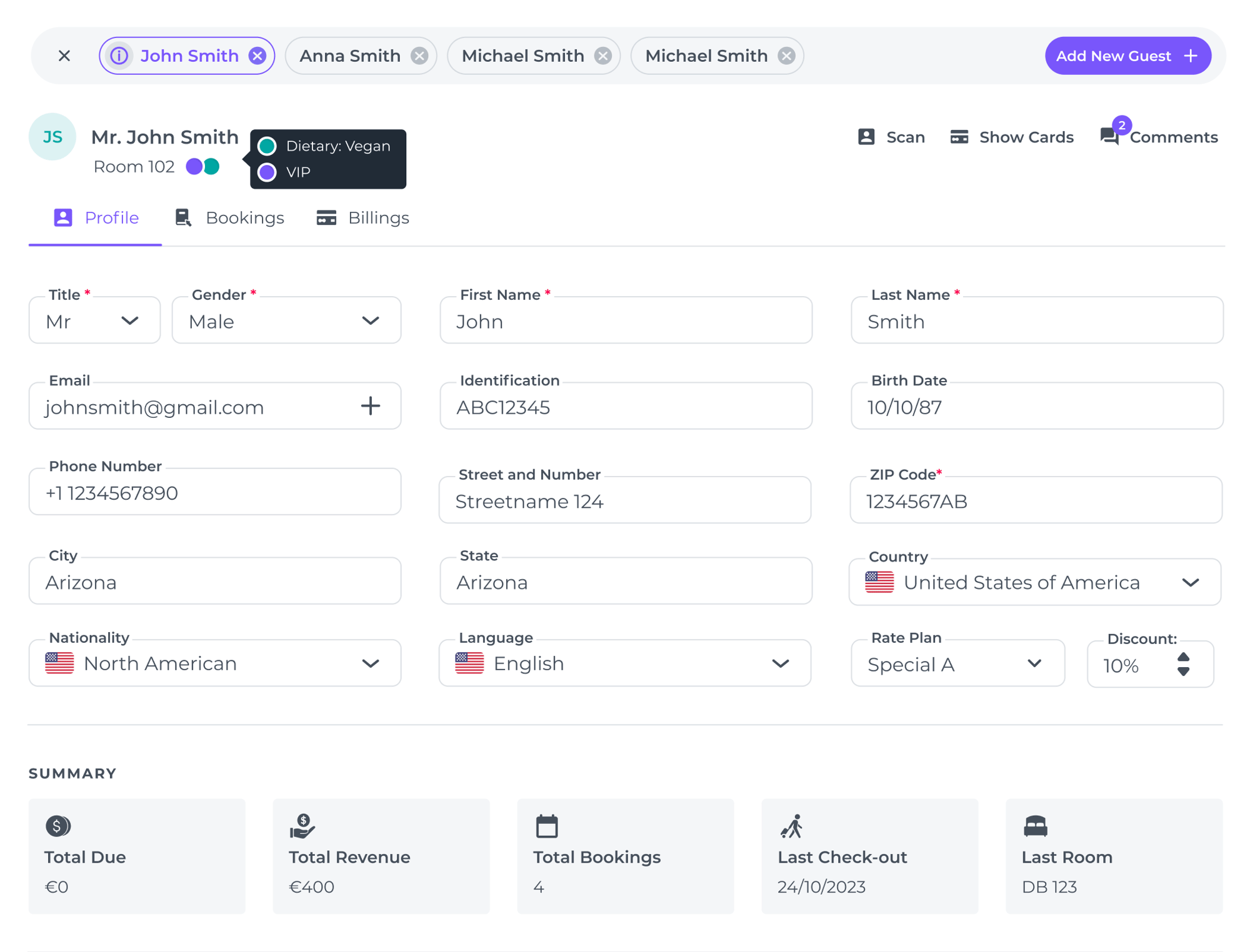
Both a strategy and a tool, this guest experience platform centralises data, automates communications, and integrates your hotel tech stack into a single unified workflow. That way, all your staff can access a complete view of each guest and leave nothing to assume.
By leveraging hotel CRM data, several key advantages can be enjoyed:
-
Fewer Mistakes: Guest relationship management systems are particularly valuable in reducing the risk of human error. A centralised guest profile makes sure check-in and out dates, booking types, food preferences, and other special requests are documented.
-
Higher Efficiency: Automated processes save hotel staff countless hours on mundane routine tasks. This free time allows staff to be less fatigued and more engaged with customer direct services with a big impact on guest experience.
-
Personalised Services: A digital guest profile allows hotels to tailor special experiences that perfectly suit the guests preferences. From small thank you gifts for return guests, to stocking the mini fridge with their favourite snacks, the options for a personalised guest experience are endless.
-
Stronger Brand Loyalty: Guests who feel seen, understood and catered for by your hotel are much more likely to return in the future. In fact, studies show that 86% of consumers are willing to pay more for a better customer experience (WifiTalents, 2026).
When integrated effectively, these technologies create a smoother guest journey while allowing teams to focus on hospitality rather than administration.
Data Activation: The Future of Guest Experience
Data activation refers to the process of transforming raw data into actionable insights that improve your guests' experiences, your staff's job, and your hotel's revenue and reputation.
Hotels have the ability to collect vast amounts of guest information; through bookings, surveys, and other operational interactions. However, to the dismay of independent hoteliers, much of this data remains unused.
Instead of simply storing data, a modern PMS and tech stack can help to analyse it to better understand your hotel guests. This helps you anticipate needs, remember important details, and personalise communications with barely any effort.
For independent hotels, data activation is an opportunity to compete with large chains that rely on extensive loyalty programmes and big budget marketing.
Hotel Guest Experience: Wrap Up
A good hotel guest experience rarely depends on a single solution. Instead, it’s the result of consistent operational alignment, communication, and solid service culture. Successful hotels tend to focus on three priorities:
- Remove friction: Simplify the guest journey wherever possible. Booking, arrival, and communication processes are streamlined so guests never feel confused or delayed.
- Empower your staff: When the mundane tasks are automated, your front-line employees are given the opportunity to resolve guest issues directly and creatively. This prevents small problems from escalating into negative reviews.
- Embrace technology: The majority of a hospitality tech stack is there to support - not replace - your hotel staff. Automation handles repetitive tasks, allowing staff to focus on meaningful guest interactions.
Together, these improvements create a smoother and more personalised experience without dramatically increasing operational complexity. They also allow independent hoteliers to create meaningful guest relationships that large chains often struggle to replicate.
Why Noovy?
Delivering exceptional guest experiences requires more than just great service; it requires centralised systems and actionable guest data.
Noovy is built to help independent hotels unlock their full potential without the complexity of traditional enterprise software. Our platform:
- Centralises guest information
- Integrates with existing hospitality systems
- Automates communication across the entire guest journey
Curious to see how hospitality technology can transform the guest experience? Book a free demo today to see how Noovy empowers independent hotels to compete with global brands!

Frequently Asked Questions
What is hotel guest experience?
Hotel guest experience refers to the complete journey a guest has with a hotel. The process starts with online discovery and booking, continues during their entire visit to the hotel, and ends with post-stay communications, marketing and reviews.
How to increase guest satisfaction in hotels?
Hotels can improve guest satisfaction by streamlining the guest journey to make it as seamless and frictionless as possible. By introducing smart hospitality technologies, hotels can empower staff to resolve guest-direct issues more quickly. In addition, collecting and activating guest data to tailor personalised services can set a very positive tone for hotel guests.
Why is guest experience important for independent hotels?
Guest experience is crucial for independent hotels because it drives positive reviews and reputation, which can lead to potential repeat bookings and new customers. This helps independent hotels and boutiques compete with larger hotel chains, increase direct bookings, and avoid paying hefty OTA commissions.
What technology helps improve hotel guest experience?
A range of modern hospitality technologies can help improve hotel guest experience. Customer management systems (CRM) help create centralised guest profiles for personalised experiences, automated guest messaging platforms can handle round the clock communication, and contactless payment and check-in solutions reduce friction in the guest journey.