In today's world, contactless payments are an everyday necessity. From grocery stores and vending machines, to ticket booths and even our taxes, the efficiency brought by contactless payment methods find us in every transaction, and independent hotels are no exception.
Imagine 100 guests checking into a boutique hotel. If the front desk was to spend 6 minutes per guest dealing with manual payments and check in, the front desk would spend a staggering ten hours simply typing credit card numbers into a terminal!
This operational drain on your hotel's function also leads to reconciliation lag (delays in balancing your books) and avoidable human error. By removing the friction of physical cards, contactless payment efficiency allows hotels to reclaim countless hours and revenue, whilst pursuing a more eco-friendly business model.
In this tactical guide, we will show you how to become a contactless hotel, including automating your guest billing process to avoid failed payments, and securing your property against chargebacks to improve your hotels revenue.
Curious to learn more? Book a free demo of Noovy's tech stack today!
Table of Contents
Automating Payments Before Guests Arrive
Payment automation begins from the moment of booking, not just at the front desk. Whether a traveller books a stay at your hotel through an OTA or your direct site, payments will almost always be handled contactless. For many hoteliers, the biggest headache is dealing with masked emails from OTA sites.
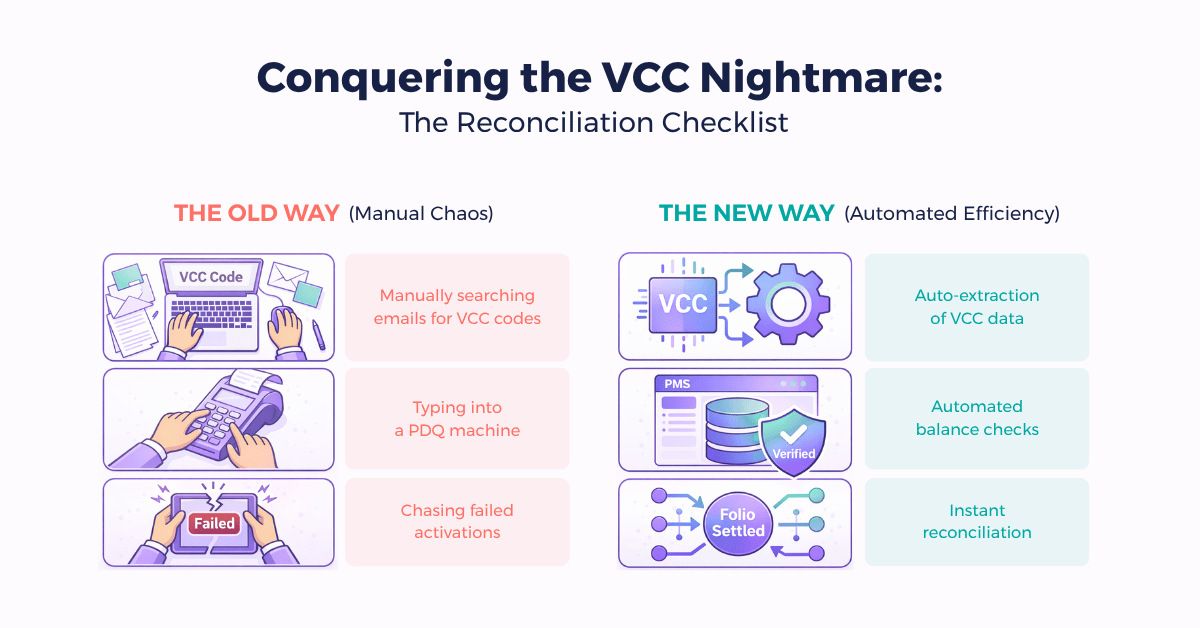
Commanding over 70% of the European market (HOTREC, 2024), OTAs issue virtual credit cards (VCC) when a guest makes a booking. These temporary cards encrypt all contact and payment information, requiring manual activation after the guest arrives at the hotel. This results in the lost opportunity of pre-arrival communication.
Processing VCCs is a major reconciliation nightmare, but with contactless payment methods such as digital folio payments, hotels can forge a relationship to their guests much earlier on than the front desk.
Digital Folio Payments
A folio is simply the guest’s running bill. Traditionally, this was a paper file or a static screen in your PMS that tallies the costs of a specific guest. In modern PMS and RMS systems, the folio is a more dynamic, automated tool that does more than just show a bill.
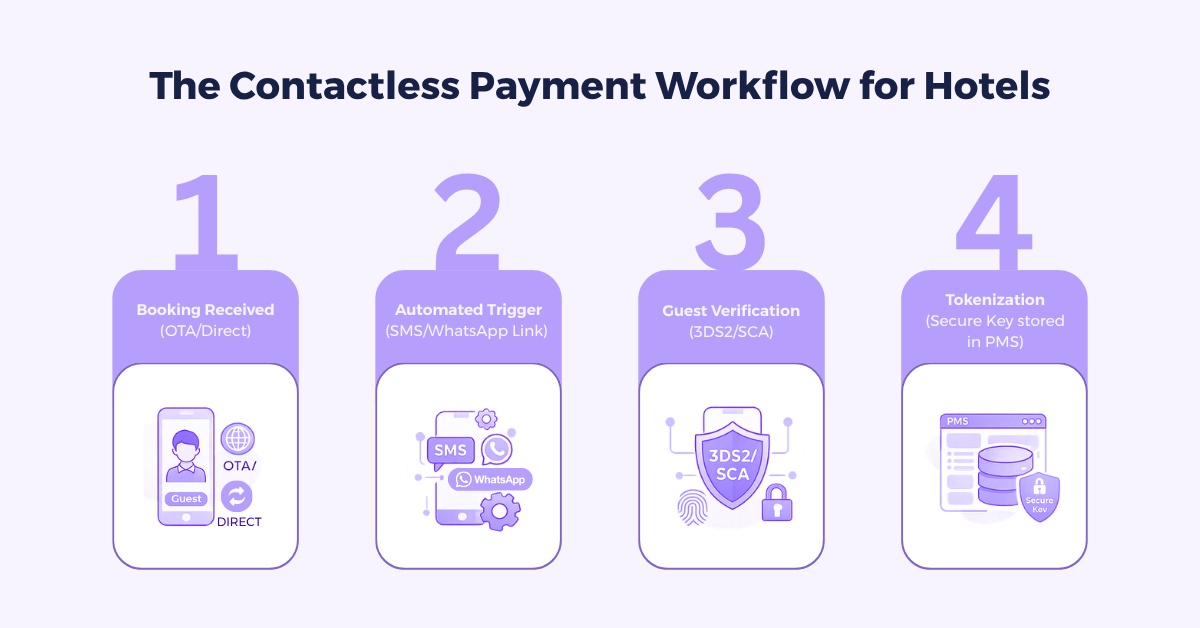
With automated hotel folio payments, hotels can send a secure link to a guest’s phone as soon as they book, instead of waiting until the front desk to do so.
Here’s what the workflow of an automated folio payment looks like:
Ending Manual Bookkeeping with PMS Integration
Centralised payment reconciliation is the process of making sure the money in your bank account matches the sales recorded in your property management system. While a modern PMS can automate this process, some hotels still handle this task manually.
If your general manager is spending countless hours matching paper credit card slips against a computer report, your hotel has a clear reconciliation problem. Luckily, contactless payments are not just easier for guests; they also help your hotel automate data collection from the get go.
Integrated payment processing for hotels
When a guest taps to pay with their card or pays via mobile link, the transaction data flows directly into your PMS without the need for a middle man. That way, the chances of incorrect sums, typos, and other human errors are completely eliminated.
That way, boutique hotels spend less time tracking their efficiency, and still get more accurate results than manual methods. Here’s a checklist to help you improve efficiency pitfalls:
By moving toward hospitality automation in your hotel, you liberate your team from the front desk and allow them to focus on the guest rather than the screen.
Protecting Your Revenue from Payment Disputes
A chargeback is a transaction dispute. This is when a guest tells their bank that they don't recognise the charge from your hotel, forcing the bank to take the money back from you.
For independent hotels, these disputes can be hard to win if the card was manually typed in, because you have no proof that the guest was really there at your hotel. This major liability can easily be tackled with contactless payment methods.
The Liability Shift: How Contactless Protects You
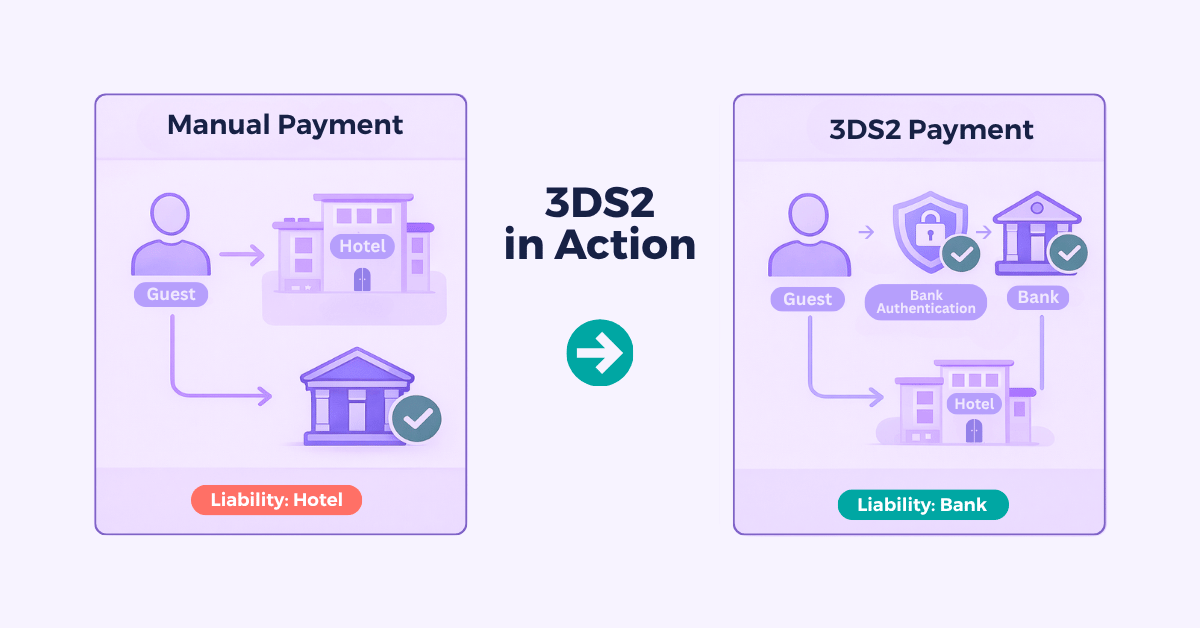
Modern contactless payments use 3D Secure 2 (3DS2) to verify payments. This may sound technical, but it’s just a digital "handshake" between the guest and their bank.
Because the guest has to verify the payment on their own device, the financial responsibility of the payment shifts from the hotel to the bank. In short, the 3DS2 verification acts as a method of consent, ensuring that all involved parties know that the transaction was legitimate.
Here are three tactical steps to reduce the risk of payment disputes for your hotel:
Contactless Payments: Wrap Up
The era of manual hotel management is clearly ending, and every minute spent typing card numbers in a table is a minute stolen from your guest experience and potential revenue. By introducing contactless payment for hotels, you can build a more resilient, optimised, and efficient business model.
In short, your tactical wins are clear:
- Zero manual data entry means zero chance of human errors.
- Automated reconciliation means hours of saved management admin every week.
- Digital verification means your hard-earned revenue is protected from disputes.
With contactless service for your hotel payment system, you can revamp hotel efficiency, reliability and guest experience for years to come.
Why Noovy?
One of the most powerful aspects of the Noovy tech stack is interconnectivity. For example, we don’t just directly link contactless payments to your guest's bill, but also to other teams, such as the housekeeping team's schedule. Here’s how that looks:
- The process: A guest settles their bill via their smartphone while having breakfast. Noovy identifies the "paid" status and instantly sends a notification to housekeeping.
- The result: Your team knows exactly which rooms are ready for turnover without the front desk having to call them. This reduces the "dead time" between guests and allows for faster room preparation.
By using personalised guest payment preferences within the Noovy system, you can even remember if a guest prefers to pay via Apple Pay or a corporate card, making their next stay even smoother.
Ready to upgrade your hotel? Book a free demo with Noovy today!